
What is Color psychology in home decor is the study of how colors influence human emotions, mood, and behavior within living spaces. By understanding the psychological effects of different hues, homeowners and designers can create environments that promote relaxation, energy, focus, or social interaction.
In interior design, color is not just decorative—it affects perception, spatial experience, and emotional response. For example, warm colors like red and orange can energize a space, while cool colors like blue and green often promote calm and relaxation.
Color Psycology for room color ideas leverage this understanding to select shades that match the purpose of each room, from energizing kitchens to soothing bedrooms.
Summary
- Color Psychology studies how colors affect mood, behavior, and perception
- Warm colors (reds, oranges) stimulate energy; cool colors (blues, greens) calm
- Using color psychology helps create intentional, mood-optimized spaces
Key Takeaways
- Colors have a measurable psychological impact in home decor
- Understanding color psychology allows for purposeful room design
- Integrating room color ideas ensures spaces evoke desired emotions
Common Misconceptions
| Misconception | Reality |
| Bright colors always overwhelm a room | Proper balance and accents can enhance energy without overstimulation |
| Neutral colors are boring | Neutral palettes can create calming and versatile spaces |
| Color choice is purely aesthetic | Color significantly affects mood, perception, and behavior |
Psychological Effects of Colors
Understanding Emotional Color Psychology in home decor helps homeowners use colors to influence emotions and behaviors. Different colors evoke specific moods and can be applied strategically in various rooms to create the desired atmosphere.
Warm Colors (Red, Orange, Yellow)
- Color Psychological Effect: Energizing, stimulating, and attention-grabbing
- Use in Home Decor: Living rooms, dining areas, kitchens for activity and socialization
- Caution: IN Color Psycology overuse may cause agitation or restlessness
| Pros | Cons |
| Boosts energy and excitement | Can feel overwhelming in large doses |
| Encourages social interaction | May increase stress if overused |
| Creates cozy and inviting spaces | Not ideal for bedrooms or relaxation zones |
Color Psycology and Cool Colors (Blue, Green, Purple)
- Color Psycology and Psychological Effect: Calming, soothing, and restorative
- Color Psycology and Use in Home Decor: Bedrooms, bathrooms, home offices for focus and relaxation
- Caution: Overuse of dark shades may make a space feel cold or distant
| Pros | Cons |
| Promotes relaxation and calm | Dark shades can feel cold or gloomy |
| Enhances concentration and focus | May reduce energy in active spaces |
| Suitable for bedrooms and study areas | Can feel uninviting if too muted |
Neutral Colors (White, Gray, Beige)
- Psychological Effect: Balances spaces, creates flexibility, and highlights accent colors
- Use in Home Decor: All rooms, especially as a base for accent walls or furniture
- Caution: Too much neutral can feel sterile or monotonous
| Pros | Cons |
| Provides versatile and timeless backgrounds | Can feel bland if not paired with accents |
| Enhances natural light and perception of space | Overuse may seem cold or clinical |
| Highlights bold colors effectively | Lacks emotional stimulation on its own |
Summary
- Warm colors energize and encourage social interaction
- Cool colors soothe and support focus and relaxation
- Neutral colors provide balance and highlight accent colors
- Strategic use of colors enhances room mood and functionality
Key Takeaways
- Every color has a psychological impact that can influence mood
- Room color ideas should consider both emotion and functionality
- Balanced color schemes create harmony and purpose in home spaces

Choosing Colors for Different Rooms
Using Color Psychology in home decor effectively means selecting colors that align with the function and desired mood of each room. Different rooms benefit from specific hues to optimize energy, relaxation, and comfort.
Living Room
- Purpose: Social interaction, relaxation, and entertainment
- Recommended Colors: Warm neutrals, soft blues, earthy tones
- Effect: Creates inviting, cozy spaces that encourage conversation
| Room | Suggested Colors | Mood/Effect |
| Living Room | Beige, soft blue, warm gray | Cozy, welcoming, balanced |
| Accent Options | Terracotta, burnt orange | Adds warmth and energy without overwhelming |
Bedroom Color Psycology
- Purpose: Rest, relaxation, and rejuvenation
- Recommended Colors: Soft blues, greens, lavender, muted neutrals
- Effect: Promotes calm, reduces stress, and supports better sleep
| Room | Suggested Colors | Mood/Effect |
| Bedroom | Soft blue, sage green, lavender | Calming, restorative |
| Accent Options | Light pink, cream | Gentle warmth, soothing energy |
Kitchen Color Psycology
- Purpose: Energy, appetite stimulation, and activity
- Recommended Colors: Reds, oranges, yellows, warm neutrals
- Effect: Encourages conversation, creativity, and appetite
| Room | Suggested Colors | Mood/Effect |
| Kitchen | Warm yellow, soft red, terracotta | Energetic, lively |
| Accent Options | Olive green, beige | Balanced energy, inviting atmosphere |
Home Office Color Psycology
- Purpose: Color Psycolgy and its Focus on , productivity, and creativity
- Recommended Colors: Blue, green, soft neutrals
- Effect: Enhances concentration, reduces stress, and stimulates clear thinking
| Room | Suggested Colors | Mood/Effect |
| Home Office | Blue, soft gray, green | Focused, calming, productivity-enhancing |
| Accent Options | Warm wood tones, muted yellow | Adds warmth without distraction |
Summary
- Living rooms benefit from warm neutrals and soft blues for social comfort
- Bedrooms thrive on cool, muted colors for rest and relaxation
- Kitchens use warm, stimulating colors to boost energy and appetite
- Home offices rely on cool, calming shades to improve focus and productivity
Key Takeaways
- Room-specific color selection enhances functionality and mood
- Room color ideas should balance primary and accent colors
- Using color psychology ensures every space supports its intended purpose
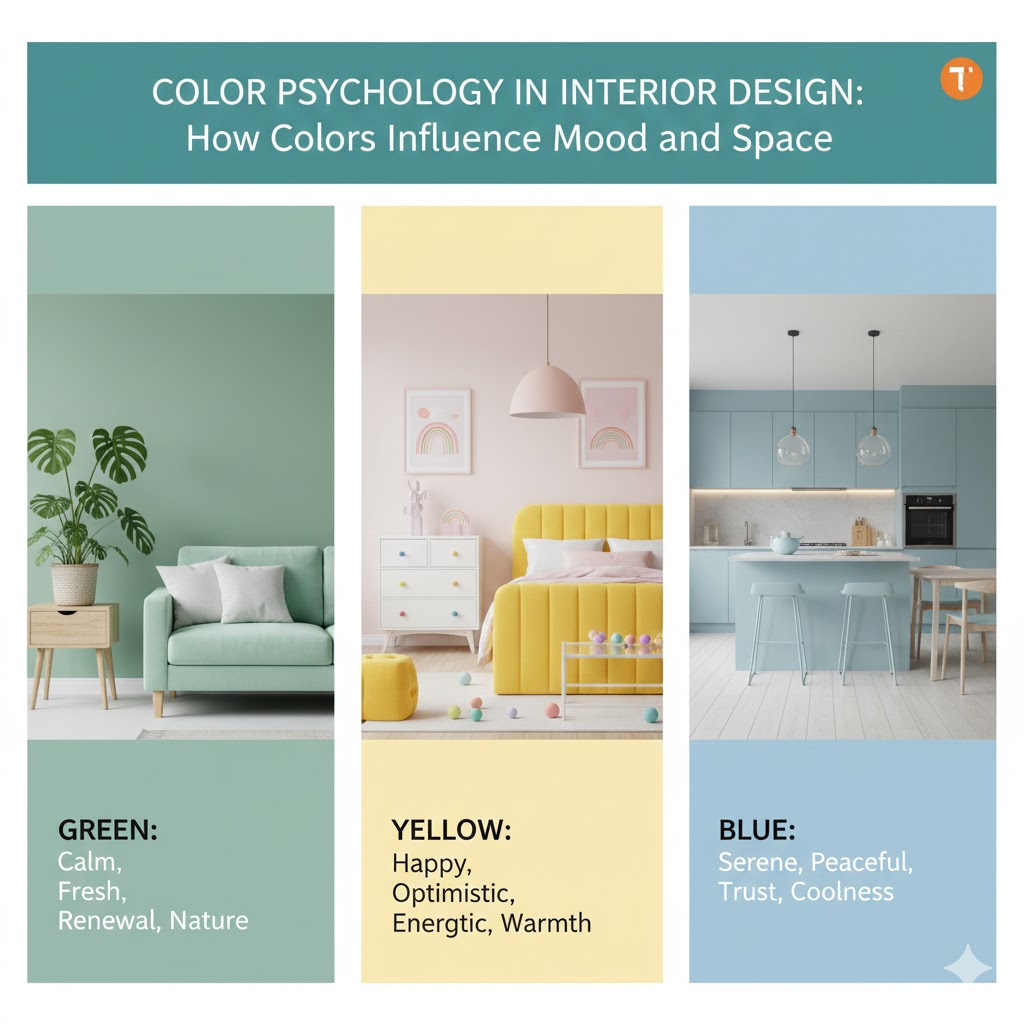
Color Combinations and Palettes for Home Decor
Color Psycology combinations is essential in Color Psychology in home decor. The right palette balances primary, secondary, and accent colors to evoke the desired mood while enhancing the room’s aesthetic appeal.
Types of Color Combinations
| Combination Type | Description | Example Usage |
| Complementary | Colors opposite each other on the color wheel | Blue and orange in a living room for balance and energy |
| Analogous | Colors next to each other on the wheel | Green, teal, and blue in a bedroom for a calming gradient |
| Triadic | Three evenly spaced colors on the wheel | Yellow, blue, and red accents in a kitchen for vibrant energy |
| Monochromatic | Variations of a single color | Light gray, medium gray, and charcoal in a modern office for sophistication |
Tips for Using Color Palettes in Home Decor
- Color Psycology and Balance warm and cool tones: Avoid overwhelming spaces with too much warmth or coolness.
- Accent colors matter: Use bold or bright accent colors to energize or highlight key features.
- Consider natural light: Light affects perception, so test colors under different lighting conditions.
- Room-specific purpose: Match palettes to the function of each room (e.g., calming in bedrooms, energizing in kitchens).
Summary
- Color Psycology and Complementary colors provide visual contrast
- Analogous colors create harmony and cohesion
- Triadic palettes add vibrancy while maintaining balance
- Monochromatic schemes create elegance and simplicity
Key Takeaways
- Use Color Psycology in combinations to enhance the psychological impact of each room
- Accent colors and lighting significantly affect mood and perception
- Room color ideas should consider palette harmony and purpose
Common Misconceptions
| Misconception | Reality |
| Bold colors clash if paired | Complementary and triadic palettes balance bold shades |
| Monochromatic colors are boring | Proper shading and texture add depth and interest |
| Color palettes are only aesthetic | They directly influence mood, energy, and perception |
How Light and Space Affect Color Perception
In Color Psychology in home decor, the way a color appears in a room is influenced not only by the hue itself but also by lighting conditions and spatial dimensions. Understanding these effects ensures that room color ideas achieve the intended mood and visual impact.
Light Effects on Color
| Type of Light | Effect on Color | Practical Tip |
| Natural Light (Daylight) | Colors appear more vivid and true | Test paint samples at different times of day |
| Warm Artificial Light (Incandescent) | Enhances warm tones, softens cool tones | Use in living rooms or bedrooms for cozy ambiance |
| Cool Artificial Light (LED/Fluorescent) | Enhances blues and greens, mutes reds | Ideal for workspaces and home offices |
| Mixed Lighting | Can shift color perception | Balance light sources and consider dimmers |
Space and Color Perception
| Room Size | Color Impact | Recommendation |
| Small Rooms | Dark colors make spaces feel smaller | Use light, neutral, or cool tones to expand visual space |
| Large Rooms | Light colors can feel empty or cold | Introduce warm accents to add intimacy and balance |
| Ceilings | Low ceilings feel lower with dark colors | Use light colors to create a sense of height |
| Open Plan Spaces | Colors define zones and mood | Use contrasting or complementary palettes to separate areas |
Summary
- Color Psycology and Light type affects color brightness, warmth, and perceived intensity
- Room size and ceiling height alter how colors are experienced
- Strategic use of color with light and space improves mood, perception, and functionality
Key Takeaways
- Always test room color ideas under actual lighting conditions
- Light and spatial factors can change a color’s psychological effect
- Combining color, light, and spatial awareness maximizes emotional impact
Modern Trends in Color Psychology for Interior Design
Recent trends in Color Psychology in home decor focus on wellness, sustainability, and personalization, blending aesthetics with emotional impact. Modern interior design emphasizes creating spaces that support mood, productivity, and comfort while reflecting personal style.
Trending Color Concepts
| Trend | Description | Application in Home Decor |
| Biophilic Colors | Nature-inspired greens, blues, and earth tones | Bedrooms, living rooms, kitchens to promote calm and connection with nature |
| Warm Minimalism | Soft neutrals with warm accents | Open-plan living spaces and offices for cozy, clutter-free environments |
| Bold Accents | Vibrant shades used in small doses | Accent walls, furniture, or decor items to energize and personalize a space |
| Moody Interiors | Dark blues, deep greens, charcoal | Creates intimate, relaxing spaces in bedrooms and lounges |
| Pastel Hues | Soft pinks, lavenders, light blues | Enhances serenity in nurseries, bathrooms, and relaxation areas |
Also read: What is Color Psycology?
Practical Tips for Modern Color Application
- Combine neutrals with accents for balance and visual interest
- Use nature-inspired colors to support mental health and stress reduction
- Consider textures and finishes to amplify the psychological effect of colors
- Rotate seasonal accent colors to refresh energy in living spaces
Summary
- Modern trends prioritize wellness, personalization, and emotional balance
- Biophilic and pastel colors promote calm; bold and moody colors add personality
- Thoughtful use of color, texture, and accents enhances room mood and aesthetic appeal
Key Takeaways
- Trend-driven room color ideas blend psychology with style
- Colors should align with room function and emotional goals
- Seasonal and accent variations keep interiors dynamic and engaging
Common Mistakes in Using Color at Home
Even with an understanding of Color Psychology in home decor, homeowners often make mistakes that reduce the effectiveness of their color choices. Avoiding these pitfalls ensures that room color ideas create the intended mood and enhance the space.
Frequent Color Mistakes
| Mistake | Why It Happens | Solution |
| Overusing Bold Colors | Strong hues can overwhelm a room | Use bold colors as accents rather than dominant shades |
| Ignoring Room Function | Colors chosen for aesthetics, not purpose | Match colors to the room’s intended mood and activity |
| Poor Lighting Consideration | Color looks different under artificial or low light | Test samples under all lighting conditions before finalizing |
| Too Many Contrasting Colors | Creates visual chaos | Stick to 2–3 main colors with complementary accents |
| Neglecting Texture and Finish | Flat color can feel cold or lifeless | Incorporate textures, patterns, and varied finishes |
Pros and Cons of Using Color Psychology in Home Decor
| Pros | Cons |
| Enhances mood and emotional well-being | Incorrect choices can negatively impact energy or relaxation |
| Supports functionality of different rooms | Overcomplicating palettes can create visual stress |
| Improves aesthetic appeal and personalization | Requires careful planning and testing under lighting conditions |
| Can highlight architectural features | Bold colors may overpower furniture or décor if overused |
Summary
. Color Psycology needs Proper planning, testing, and palette balance mitigate negative effects
- Pros include enhanced mood, functionality, and visual appeal; cons arise from poor execution
Key Takeaways
- Thoughtful application of color psychology prevents design errors
- Room color ideas should balance aesthetics, function, and emotional impact
- Pros outweigh cons when colors are chosen intentionally and tested

Also read:What is Color Psycology?
Cultural and Personal Influences on Color Choice
Color Psycology perception is not universal. In Color Psychology in home decor, cultural background and personal experiences significantly influence how individuals respond to colors. For example, white represents purity in some cultures, while in others it may symbolize mourning. Personal memories associated with specific colors can also affect emotional responses within a home environment.
Practical Implication
When applying room color ideas, homeowners should consider personal comfort and cultural context alongside general psychological principles to ensure emotional alignment with the space.
Role of Accent Colors in Emotional Balance
Accent colors play a crucial role in balancing emotional intensity in interior spaces. Rather than dominating a room, accent shades introduce contrast and visual interest while reinforcing the primary mood.
Examples of Effective Accent Use
- Blue rooms with yellow accents enhance calmness while adding optimism
- Neutral spaces with green accents promote freshness and balance
- Warm-toned rooms with muted metallic accents add sophistication without overstimulation
Using accent colors strategically allows flexibility without committing to bold, permanent changes.
Color Psychology and Long-Term Living Comfort
Color Psycology In home decor, color decisions should account for long-term psychological comfort, not just immediate visual appeal. Overly vibrant or trendy colors may cause fatigue over time, while balanced palettes support sustained well-being.
Best Practices for Longevity
- Prioritize neutral or soft base colors
- Use trends through decor elements rather than walls
- Adapt room color ideas based on how frequently the space is used
Psychological Impact of Color Transitions Between Rooms
Smooth color transitions between rooms support visual flow and emotional continuity. Abrupt color changes can disrupt harmony, especially in open-plan layouts.
Recommended Approach
- Use analogous color schemes between connected spaces
- Maintain consistent undertones throughout the home
- Apply darker shades gradually to define zones rather than divide them
Conclusion
Color Psychology in home decor plays a crucial role in shaping mood, behavior, and the overall atmosphere of a home. By understanding the emotional effects of warm, cool, and neutral colors, and strategically applying room color ideas, homeowners can create spaces that are functional, aesthetically pleasing, and emotionally supportive.
From living rooms that encourage social interaction to bedrooms designed for relaxation, thoughtful color selection enhances both well-being and design. Modern trends, including biophilic colors, pastels, and mood-focused palettes, allow personalization while maintaining balance and harmony. By avoiding common mistakes—such as overusing bold colors or ignoring lighting—color choices can positively transform home spaces.
Key Takeaways
- Colors influence emotions, perception, and behavior in every room
- Room color ideas should align with room function and desired mood
- Accent colors, lighting, and palette harmony enhance psychological impact
- Modern trends allow personalization while supporting well-being
FAQs
1. What is color psychology in home decor?
Color Psychology in home decor is the study of how colors influence mood, behavior, and perception in living spaces. It guides homeowners in selecting colors to create desired atmospheres in different rooms.
2. How do colors affect mood at home?
Warm colors like red and orange can energize and stimulate social interaction, while cool colors like blue and green promote calm and relaxation. Neutral colors balance spaces and highlight accent tones.
3. Which colors are best for bedrooms?
Soft blues, greens, lavender, and muted neutrals are ideal for bedrooms, as they create a calming and restful environment conducive to sleep.
4. What are some room color ideas for small spaces?
Light and neutral colors such as soft beige, white, or pastel shades make small rooms feel larger and more open. Cool colors can also visually expand space.
5. How can I create a harmonious color palette for my home?
Use color combination strategies like complementary, analogous, triadic, or monochromatic palettes. Balance primary, secondary, and accent colors to enhance mood and cohesion.
6. Can lighting affect how colors look in a room?
Yes, natural and artificial lighting changes the perception of color. Warm lights enhance warm tones, cool lights enhance cool tones, and mixed lighting may alter how colors appear throughout the day.
7. What are common mistakes in using color at home?
Overusing bold colors, ignoring room function, poor lighting considerations, and too many contrasting colors are common mistakes that can negatively affect mood and space perception.
 Who Can