
Understanding Water Scarcity:
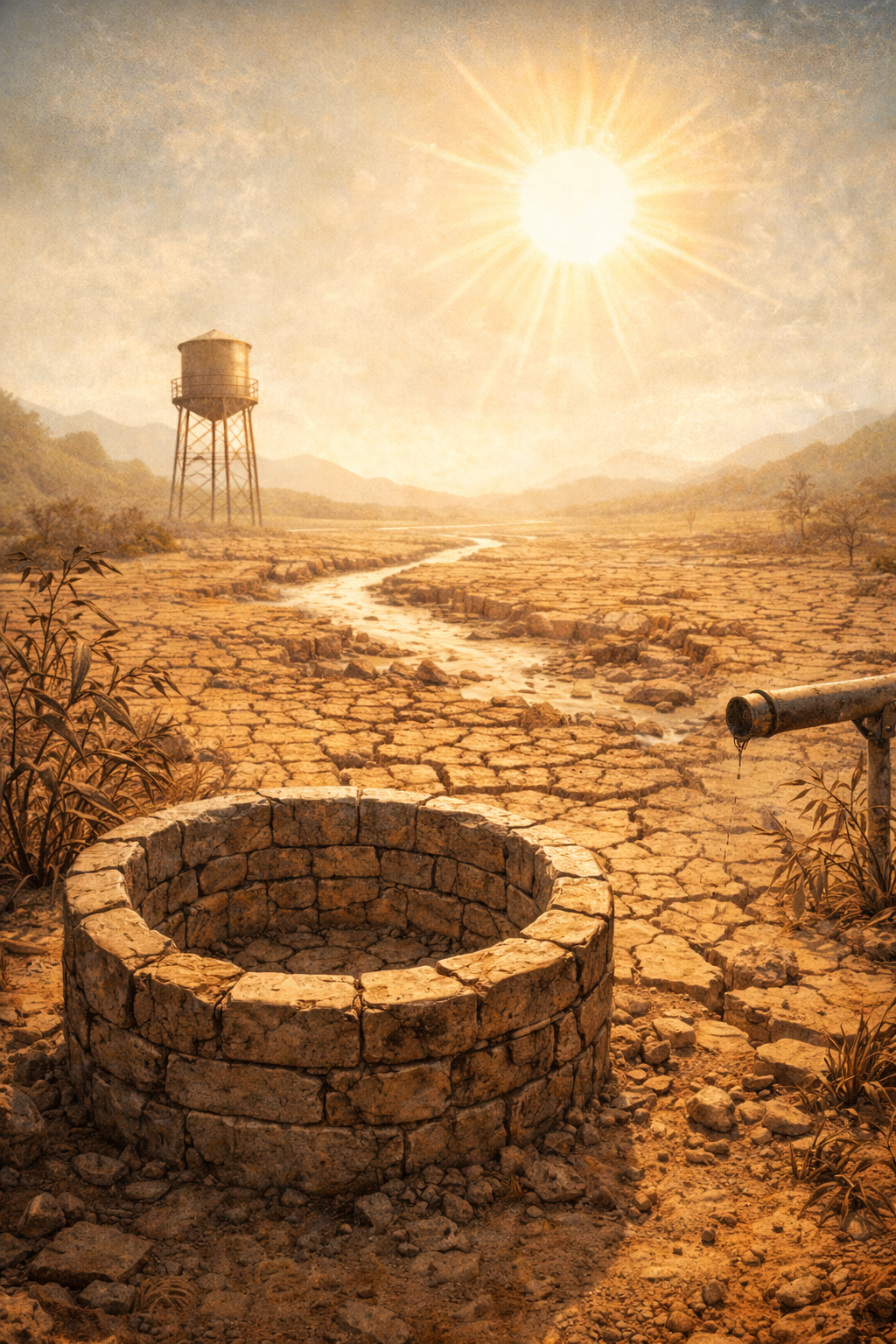
Water scarcity refers to the lack of sufficient available water resources to meet the demands of a region. It can be caused by natural factors such as droughts, climate change, and geographical limitations, or by human factors like overuse, pollution, and poor water management. Water scarcity affects billions of people worldwide, limiting access to safe drinking water, sanitation, and agricultural resources.
There are two main types of water scarcity: physical scarcity and economic scarcity. Physical scarcity occurs when natural water resources are insufficient to meet demand, often in arid or drought-prone regions. Economic scarcity happens when water is available but access is limited due to inadequate infrastructure, financial constraints, or mismanagement. Understanding these types helps policymakers, communities, and individuals target the right solutions.
Key Facts:
- Over 2 billion people live in countries experiencing high water stress.
- Physical scarcity is most common in the Middle East and North Africa.
- Economic scarcity is widespread in parts of Sub-Saharan Africa and South Asia.
- Climate change is expected to worsen both types of water scarcity in the coming decades.
Summary:
Water scarcity is a global challenge influenced by environmental and human factors. Recognizing its types and causes is crucial for effective planning and sustainable water management.
Key Takeaways:
- Water scarcity affects billions worldwide.
- Physical scarcity is due to natural limits, economic scarcity is due to access issues.
- Climate change and mismanagement exacerbate scarcity.
- Solutions must address both supply and access.
Causes of Water Scarcity:
Water scarcity arises from a combination of natural and human-induced factors. Understanding these causes is essential for developing effective solutions. Climate change, population growth, pollution, and over-extraction are among the most significant contributors to global water scarcity.
Climate change and drought are major natural drivers. Rising temperatures increase evaporation, reduce rainfall in certain regions, and intensify the frequency and severity of droughts. Regions already prone to aridity, like the Middle East and parts of Africa, are particularly vulnerable.
Population growth and urbanization increase demand for water in households, agriculture, and industry. Rapid urban expansion often outpaces infrastructure development, leading to unequal access and overuse of local water sources.
Water pollution and mismanagement further exacerbate scarcity. Industrial discharge, untreated sewage, and agricultural runoff contaminate freshwater sources, rendering them unsafe. Poor governance and inefficient water distribution amplify these effects, creating economic scarcity even where water exists.
Over-extraction of groundwater is another critical factor. Aquifers are depleted faster than they can naturally recharge, threatening long-term water security for agriculture, industry, and drinking purposes.
Ready Facts:
- Climate change reduces rainfall and increases droughts globally.
- Population growth drives up water demand, especially in urban areas.
- Water pollution contaminates rivers, lakes, and aquifers, limiting usable water.
- Over-extraction of groundwater has lowered water tables in Asia, Africa, and the Americas.
Summary:
Water scarcity is driven by a combination of environmental and human factors. Addressing it requires both sustainable management of resources and policies that account for population growth, climate change, and pollution.
Key Takeaways:
- Climate change intensifies drought and rainfall variability.
- Growing populations increase water demand beyond sustainable supply.
- Pollution and mismanagement reduce available freshwater.
- Groundwater overuse threatens long-term water security.
Global Water Scarcity Statistics:
Global water scarcity affects billions of people and varies widely across regions. According to the United Nations, over 2 billion people live in countries experiencing high water stress, where demand exceeds 40% of available renewable water resources. Regions most affected include the Middle East, North Africa, South Asia, and parts of Sub-Saharan Africa.
Water scarcity is measured using water stress indicators, which compare total water withdrawals to renewable water availability. Countries like Yemen, Libya, and Jordan face extreme water stress, while nations such as India and Pakistan experience both physical and economic scarcity. Even regions with seemingly abundant water, like parts of the United States and China, experience localized shortages due to overuse, pollution, and inefficient distribution.
Trends show that water scarcity is worsening. Rising temperatures, changing rainfall patterns, and population growth are reducing freshwater availability. The World Resources Institute (WRI) projects that by 2050, nearly half of the global population could live in areas facing severe water stress if current consumption patterns continue.
High-Risk Regions and Countries:
- Middle East & North Africa: Yemen, Libya, Saudi Arabia, Jordan
- South Asia: India, Pakistan, Afghanistan
- Sub-Saharan Africa: Sudan, Ethiopia, South Africa
- Other regions: Northern China, parts of Australia, Western United States
Ready Facts:
- Over 2 billion people live under high water stress conditions.
- Water stress is defined as using more than 40% of renewable water supply.
- Nearly half of the global population may face severe water scarcity by 2050.
- Both physical and economic factors contribute to scarcity, even in water-rich regions.
Summary:
Water scarcity is a global challenge with uneven distribution. High-risk regions are primarily in arid climates and developing countries, but overuse and mismanagement make water scarcity a worldwide concern.
Key Takeaways:
- Water scarcity affects billions globally, especially in arid and densely populated regions.
- Stress indicators help identify areas where demand exceeds sustainable supply.
- Trends indicate worsening scarcity due to climate change and population growth.
- Both supply and access issues must be addressed for effective solutions.
Impacts of Water Scarcity:
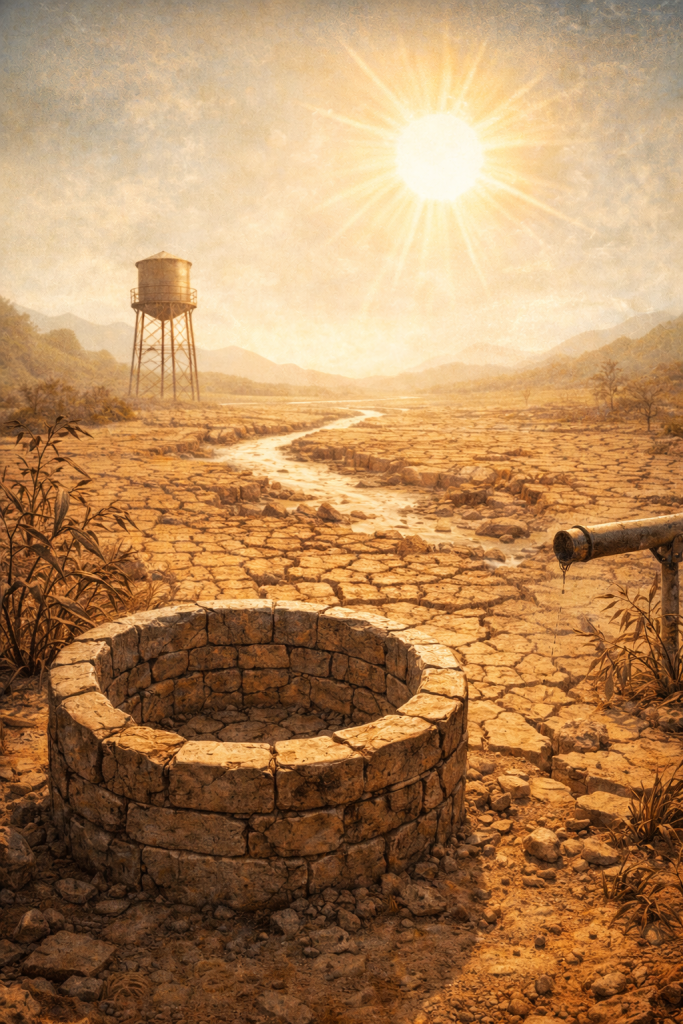
Water scarcity has far-reaching consequences on agriculture, the economy, public health, and ecosystems. Its effects are not limited to regions with low rainfall; even areas with abundant water can suffer due to mismanagement, pollution, and overuse.
Agriculture and food security: Agriculture consumes about 70% of global freshwater. Water scarcity reduces crop yields, increases food prices, and threatens livelihoods for farmers in affected regions. Droughts and irrigation limitations lead to reduced harvests and can cause long-term soil degradation.
Economic and industrial effects: Industries reliant on water, such as energy production, manufacturing, and food processing, face operational disruptions during water shortages. Reduced water availability can increase production costs, slow economic growth, and limit industrial expansion, especially in developing countries.
Public health implications: Lack of access to clean water contributes to waterborne diseases, poor sanitation, and malnutrition. Communities affected by water scarcity often experience higher rates of cholera, diarrhea, and other preventable illnesses.
Ecosystems and biodiversity: Rivers, lakes, and wetlands dry up in water-scarce regions, leading to loss of habitats and declining biodiversity. Aquatic species are particularly vulnerable, and reduced water flow can disrupt entire ecosystems, affecting both wildlife and human populations that rely on these resources.
Ready Facts:
- Agriculture accounts for roughly 70% of global freshwater use.
- Water scarcity can increase food prices and reduce crop production.
- Over 2 billion people face health risks due to unsafe water access.
- Ecosystem degradation occurs in regions facing chronic water shortages.
Summary:
Water scarcity impacts every facet of life. It threatens food security, economic stability, human health, and natural ecosystems. Addressing scarcity is essential to protect both people and the environment.
Key Takeaways:
- Water scarcity reduces crop yields and threatens food security.
- Industries face operational and economic challenges.
- Health risks increase with limited access to clean water.
- Ecosystems and biodiversity suffer from decreased water availability.
Technological and Policy Solutions:
Addressing global water scarcity requires a combination of technological innovations, efficient water management, and strong policy frameworks. Solutions focus on increasing supply, improving efficiency, and ensuring equitable access to water resources.
Technological solutions include:
- Desalination: Converting seawater into potable water, widely used in the Middle East and parts of North Africa.
- Water purification and filtration systems: Ensures safe drinking water, particularly in areas with contaminated sources.
- Efficient irrigation technologies: Drip and sprinkler irrigation reduce water waste in agriculture while maintaining crop yields.
- Rainwater harvesting: Collecting and storing rainwater for domestic and agricultural use reduces dependence on traditional water sources.
- Water recycling and reuse: Treating wastewater for industrial, agricultural, or even potable use conserves freshwater supplies.
Policy and management approaches include:
- National water management policies: Ensuring fair allocation, reducing wastage, and protecting sources.
- International treaties and cooperation: Agreements like the UN Watercourses Convention promote shared water resource management.
- Pricing and incentives: Encouraging water conservation through usage-based pricing and subsidies for efficient technologies.
- Education and awareness campaigns: Teaching communities the importance of conservation and sustainable practices.
- Monitoring and regulation: Using satellite data, sensors, and reporting systems to track usage and detect over-extraction.
Ready Facts:
- Desalination provides freshwater to arid countries like Saudi Arabia and UAE.
- Drip irrigation can reduce water usage in agriculture by up to 50%.
- Recycling wastewater can meet up to 30% of water demand in urban areas.
- Policy frameworks improve access and encourage responsible water use.
Summary:
Technological innovation and effective policy together provide practical solutions to water scarcity. By combining water-saving technologies with strong governance and community awareness, regions can secure reliable water resources for the future.
Key Takeaways:
- Technologies like desalination, irrigation efficiency, and recycling conserve water.
- Policies regulate distribution, encourage conservation, and ensure access.
- Education and monitoring reinforce sustainable water management.
- Integrated approaches maximize long-term water security.
Individual and Community Action:
Individuals and communities play a critical role in addressing water scarcity. While technological solutions and government policies are essential, everyday actions by households and local groups can significantly reduce water demand and promote sustainable use.
Household water conservation practices:
- Fix leaks in taps, pipes, and toilets to prevent water loss.
- Use low-flow faucets, showerheads, and dual-flush toilets.
- Collect rainwater for gardening, cleaning, or other non-drinking purposes.
- Reuse greywater for irrigation or cleaning.
- Limit water-intensive activities such as long showers or unnecessary car washing.
Community-led initiatives:
- Local water-saving campaigns and awareness programs.
- Construction of community rainwater harvesting systems.
- Protecting local water bodies from pollution and overuse.
- Establishing water cooperatives to manage shared water resources.
- Educational workshops to teach water stewardship and sustainable habits.
Education and advocacy:
- Promoting knowledge of water scarcity and its impacts.
- Encouraging participation in local and national water conservation programs.
- Supporting policies for sustainable water management through civic engagement.
Ready Facts:
- Household leaks can waste up to 10% of daily water use.
- Rainwater harvesting can reduce municipal water demand by up to 30%.
- Community awareness programs increase water-saving behaviors significantly.
- Reusing greywater conserves both water and energy used for treatment.
Summary:
Individual and community actions are essential in combating water scarcity. Small changes at home, combined with local initiatives and education, create a collective impact that complements technological and policy solutions.
Key Takeaways:
- Fix leaks and adopt water-saving devices at home.
- Collect and reuse water wherever possible.
- Community initiatives amplify conservation efforts.
- Education fosters long-term sustainable water habits.
Future Outlook and Recommendations:
The future of global water scarcity depends on how effectively governments, communities, and individuals respond to current challenges. Climate change, population growth, and urbanization are expected to increase pressure on water resources, making proactive measures essential.
Emerging trends and innovations:
- Smart water management: Using sensors, data analytics, and AI to optimize water distribution and detect leaks.
- Advanced desalination and purification: Improving efficiency and reducing environmental impact of seawater conversion.
- Integrated water resources management (IWRM): Coordinating water, land, and ecosystem management for sustainable outcomes.
- Climate-adaptive agriculture: Developing drought-resistant crops and efficient irrigation methods.
Policy and governance recommendations:
- Strengthen international cooperation on shared water resources.
- Implement stricter regulations to reduce pollution and over-extraction.
- Promote pricing models and incentives that encourage water conservation.
- Support public awareness campaigns and education programs.
Community and individual recommendations:
- Continue household water-saving practices and reuse strategies.
- Participate in local water stewardship and conservation initiatives.
- Advocate for sustainable water policies at regional and national levels.
Ready Facts:
- By 2050, nearly half of the world’s population could face severe water stress if no action is taken.
- Smart water management can reduce wastage by up to 20–30% in urban areas.
- Climate-adaptive agriculture improves food security while conserving water.
- Community engagement is proven to enhance the effectiveness of conservation programs.
Summary:
The outlook for water scarcity is challenging but manageable with coordinated action. Technological innovation, strong policy frameworks, and proactive community participation can secure sustainable water resources for future generations.
Key Takeaways:
- Water scarcity is projected to worsen without immediate action.
- Smart technology and innovative solutions optimize water use.
- Policy, governance, and education are critical for sustainable management.
- Individual and community engagement multiplies impact.
Conclusion
Global water scarcity is one of the most pressing challenges of the 21st century. It affects billions of people, threatens food security, disrupts economies, endangers public health, and harms ecosystems. The causes are multifaceted, including climate change, population growth, pollution, over-extraction, and poor management.
Addressing water scarcity requires a holistic approach that combines technological solutions, strong policy frameworks, and active community and individual engagement. Innovations like desalination, efficient irrigation, rainwater harvesting, and smart water management, along with international cooperation and public awareness campaigns, can significantly mitigate the problem. Every effort, from household conservation to large-scale policy implementation, contributes to securing water resources for current and future generations.
By understanding the causes, impacts, and solutions, societies can take proactive steps to ensure that water remains accessible, safe, and sustainable for all.
Frequently Asked Questions (FAQs)
What is global water scarcity?
Global water scarcity occurs when the demand for freshwater exceeds the available supply, either due to physical limitations, mismanagement, or unequal access.
Which countries are most affected by water scarcity?
Countries in the Middle East, North Africa, South Asia, and parts of Sub-Saharan Africa are most affected, including Yemen, Libya, Jordan, India, and Pakistan.
What are the main causes of water scarcity?
Major causes include climate change, population growth, pollution, over-extraction of groundwater, inefficient agricultural practices, and poor water management.
How does water scarcity impact agriculture and food security?
Agriculture uses roughly 70% of global freshwater. Scarcity reduces crop yields, increases food prices, and threatens livelihoods of farmers in affected regions.
What technological solutions exist for water scarcity?
Solutions include desalination, water purification, efficient irrigation systems, rainwater harvesting, and water recycling or reuse.
What can individuals do to help reduce water scarcity?
Individuals can fix leaks, use water-saving devices, collect rainwater, reuse greywater, and participate in community conservation initiatives.
What is the future outlook for global water scarcity?
Without action, nearly half of the world’s population could face severe water stress by 2050. Coordinated efforts involving technology, policy, and community action are essential to mitigate this crisis.
References
- United Nations. Water Scarcity. https://www.un.org/waterforlifedecade/scarcity.shtml
- Food and Agriculture Organization (FAO). The State of the World’s Land and Water Resources for Food and Agriculture. https://www.fao.org
also read : Are You Overthinking? Why It’s the New Pandemic and