
What Is Mental Health
Definition
World Health Organization defines mental health as:
“A state of well-being in which an individual realizes their own abilities, can cope with normal stresses of life, can work productively, and is able to contribute to their community.”
Mental health is not merely the absence of mental disorders. It refers to a balanced state of emotional, psychological, and social functioning.
It influences:
- How people think
- How they feel
- How they behave
- How they handle stress
- How they relate to others
- How they make decisions
Definition Snippet (Featured Snippet Optimized – 50 Words)
Mental health is a state of emotional, psychological, and social well-being that affects how individuals think, feel, and behave. It determines how people handle stress, relate to others, and make choices. Mental health is not just the absence of mental illness but the presence of overall psychological well-being.
Components of Mental Health
Mental health consists of three core components:
| Component | Description | Why It Matters |
|---|---|---|
| Emotional Well-Being | Ability to manage emotions and cope with stress | Supports resilience and stability |
| Psychological Well-Being | Healthy thinking patterns, self-esteem, purpose | Enables sound decision-making |
| Social Well-Being | Ability to form relationships and interact effectively | Builds support systems |
Emotional Well-Being
Emotional well-being involves:
- Recognizing emotions
- Regulating emotional responses
- Coping with stress effectively
People with strong emotional health can recover from setbacks and adapt to change.
Psychological Well-Being
Psychological well-being includes:
- Positive self-image
- Critical thinking
- Problem-solving skills
- Sense of purpose
It supports cognitive functioning and behavioral control.
Social Well-Being
Social well-being refers to:
- Maintaining healthy relationships
- Communicating effectively
- Participating in community life
Social connection is strongly linked to overall mental resilience.
Why Mental Health Matters
Mental health affects:
- Academic performance
- Workplace productivity
- Physical health outcomes
- Relationship stability
- Quality of life
According to global health research, mental disorders are among the leading causes of disability worldwide. Untreated mental health conditions can impact physical health, economic productivity, and social stability.
Ready Key Facts
- Mental health includes emotional, psychological, and social well-being.
- It affects thinking, mood, and behavior.
- It is not the same as mental illness.
- It influences how individuals handle stress and make decisions.
- Strong mental health improves resilience and life satisfaction.
Summary
Mental health is a multidimensional state of well-being that influences thoughts, emotions, behaviors, and relationships. It extends beyond the absence of illness and represents overall psychological balance and functional ability.
Key Takeaways
- Mental health is essential for daily functioning.
- It includes emotional, psychological, and social components.
- It affects productivity, relationships, and physical health.
- It is a foundational part of overall health.
Mental Health vs Mental Illness
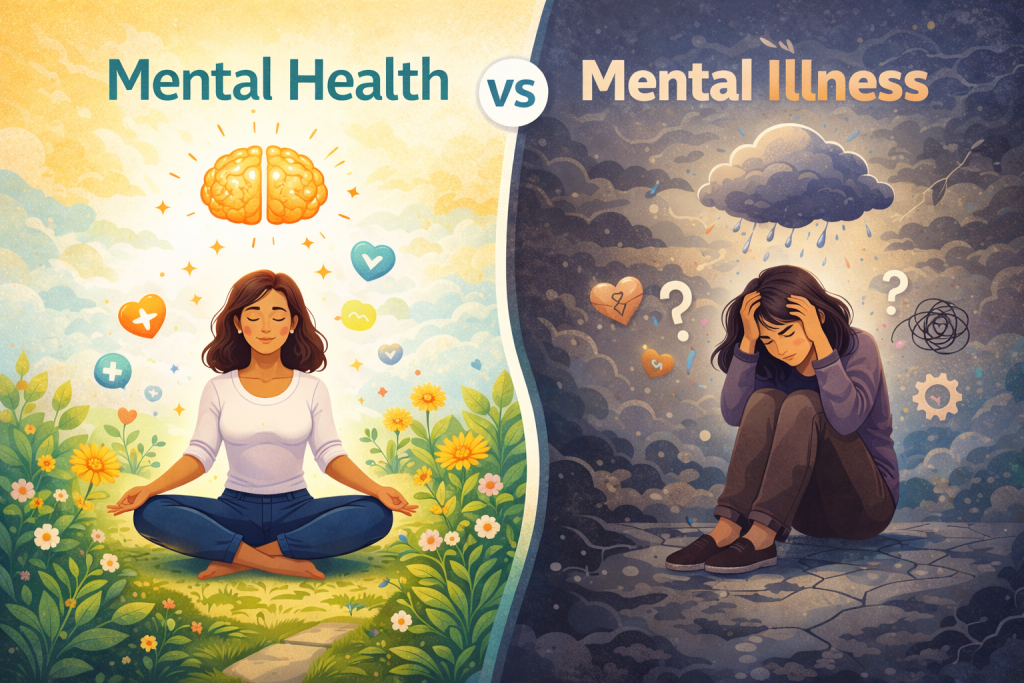
Mental health and mental illness are related but distinct concepts. Mental health refers to overall psychological well-being, while mental illness refers to diagnosed medical conditions that affect mood, thinking, or behavior.
Understanding the difference is essential for reducing stigma and improving early intervention.
Key Differences
| Aspect | Mental Health | Mental Illness |
|---|---|---|
| Definition | State of emotional, psychological, and social well-being | Clinically diagnosable disorder affecting mental functioning |
| Scope | Exists on a spectrum from thriving to struggling | Specific conditions with defined criteria |
| Diagnosis | Not diagnosed; assessed as well-being level | Diagnosed using clinical standards |
| Examples | Resilience, emotional stability | Depression, anxiety disorders, bipolar disorder |
| Treatment Need | May benefit from lifestyle support | Often requires therapy, medication, or clinical care |
Definition Snippet (Featured Snippet Optimized – 48 Words)
Mental health refers to a person’s overall emotional and psychological well-being, while mental illness refers to clinically diagnosed disorders that significantly affect thinking, mood, or behavior. A person can experience poor mental health without having a diagnosed mental illness, and vice versa.
Can Someone Have Both?
Yes.
- A person can have a diagnosed mental illness and still experience periods of good mental health.
- Someone without a mental disorder can experience poor mental health due to stress, trauma, or life changes.
- Mental health exists on a continuum rather than as a binary state.
This spectrum model is widely supported in modern psychological frameworks.
The Spectrum Model of Mental Health
Mental health is best understood as a continuum:
| Continuum Stage | Description |
|---|---|
| Flourishing | High well-being, strong coping skills |
| Moderate / Stable | Functional but may experience manageable stress |
| Struggling | Persistent stress, reduced coping ability |
| Diagnosable Disorder | Meets clinical criteria for a mental illness |
Clinical diagnoses are typically based on criteria outlined in the Diagnostic and Statistical Manual of Mental Disorders, published by the American Psychiatric Association.
Why the Distinction Matters
- Reduces stigma by clarifying terminology
- Encourages early support before conditions worsen
- Promotes preventive mental health care
- Improves public understanding of psychological well-being
Misunderstanding the difference often leads to labeling normal emotional struggles as disorders or, conversely, minimizing serious clinical conditions.
Ready Key Points
- Mental health is a state of well-being.
- Mental illness is a diagnosable medical condition.
- Mental health exists on a continuum.
- A person can have good mental health while managing a mental illness.
- Not all emotional distress qualifies as a mental disorder.
Summary
Mental health describes overall psychological well-being, while mental illness refers to specific diagnosed disorders. They are connected but not interchangeable. Mental health exists on a spectrum, and understanding this distinction supports prevention, accurate diagnosis, and reduced stigma.
Key Takeaways
- Mental health ≠ mental illness.
- Mental illness requires clinical diagnosis.
- Everyone has mental health, but not everyone has mental illness.
- Early support can prevent worsening conditions.
Common Mental Health Disorders
Mental health disorders are clinically diagnosable conditions that significantly affect mood, thinking, behavior, and daily functioning. These conditions are defined using standardized diagnostic criteria such as those outlined in the Diagnostic and Statistical Manual of Mental Disorders and are recognized by global health authorities including the World Health Organization.
Below are the most common categories of mental health disorders worldwide.
1. Depression
Depression is a mood disorder characterized by persistent sadness, loss of interest, and reduced ability to function.
Core Symptoms:
- Persistent low mood
- Loss of interest or pleasure
- Fatigue
- Sleep disturbances
- Difficulty concentrating
- Feelings of worthlessness
Depression can range from mild to severe and may require psychotherapy, medication, or both.
2. Anxiety Disorders
Anxiety disorders involve excessive fear or worry that interferes with daily life.
Common Types:
- Generalized Anxiety Disorder (GAD)
- Panic Disorder
- Social Anxiety Disorder
- Specific Phobias
Symptoms Include:
- Restlessness
- Rapid heartbeat
- Muscle tension
- Difficulty sleeping
- Avoidance behaviors
Anxiety disorders are among the most prevalent mental health conditions globally.
3. Bipolar Disorder
Bipolar disorder is characterized by extreme mood swings between depressive episodes and manic or hypomanic episodes.
Manic Symptoms:
- Elevated or irritable mood
- Increased energy
- Reduced need for sleep
- Impulsive behavior
Depressive Symptoms:
- Sadness
- Fatigue
- Loss of interest
Management typically includes mood stabilizers and psychotherapy.
4. Post-Traumatic Stress Disorder (PTSD)
PTSD develops after exposure to traumatic events such as violence, accidents, or disasters.
Symptoms Include:
- Flashbacks
- Nightmares
- Hypervigilance
- Emotional numbness
- Avoidance of reminders
Trauma-focused therapy is commonly used in treatment.
5. Schizophrenia
Schizophrenia is a severe mental disorder affecting perception, thinking, and behavior.
Core Features:
- Hallucinations
- Delusions
- Disorganized thinking
- Social withdrawal
Early intervention and long-term treatment improve outcomes.
6. Eating Disorders
Eating disorders involve abnormal eating behaviors and distorted body image.
Common Types:
- Anorexia Nervosa
- Bulimia Nervosa
- Binge-Eating Disorder
These conditions can lead to serious physical health complications if untreated.
Overview Table: Common Mental Health Disorders
| Disorder | Main Feature | Common Symptoms | Typical Treatment |
|---|---|---|---|
| Depression | Persistent low mood | Sadness, fatigue, loss of interest | Therapy, antidepressants |
| Anxiety Disorders | Excessive fear/worry | Restlessness, tension, panic | Therapy, medication |
| Bipolar Disorder | Mood swings | Mania + depression | Mood stabilizers, therapy |
| PTSD | Trauma response | Flashbacks, avoidance | Trauma-focused therapy |
| Schizophrenia | Psychosis | Hallucinations, delusions | Antipsychotics, therapy |
| Eating Disorders | Disordered eating | Restriction, bingeing | Nutritional + psychological care |
Why Classification Matters
- Enables accurate diagnosis
- Guides treatment decisions
- Improves research and data tracking
- Reduces stigma through medical recognition
Mental health disorders vary in severity, duration, and treatment response. Early identification improves long-term outcomes.
Ready Key Facts
- Depression and anxiety disorders are the most common mental health conditions globally.
- Bipolar disorder involves alternating mood episodes.
- PTSD develops after trauma exposure.
- Schizophrenia affects perception and thinking.
- Eating disorders impact both mental and physical health.
Summary
Common mental health disorders include depression, anxiety disorders, bipolar disorder, PTSD, schizophrenia, and eating disorders. These conditions are diagnosable medical disorders that affect mood, behavior, and functioning. Early intervention and evidence-based treatment significantly improve recovery outcomes.
Key Takeaways
- Mental health disorders are medical conditions with defined criteria.
- Depression and anxiety are the most prevalent worldwide.
- Treatment varies by disorder and severity.
- Early diagnosis improves prognosis.
Causes and Risk Factors of Mental Health Conditions
Mental health conditions develop through a complex interaction of biological, psychological, and environmental factors. No single cause explains all disorders. Instead, most mental health conditions arise from multiple overlapping risk factors.
According to the World Health Organization, mental disorders result from a combination of genetic, biological, social, and environmental influences.
1. Biological Factors
Biological factors involve changes or vulnerabilities in brain structure, chemistry, or genetics.
Key Biological Risk Factors:
- Genetic predisposition (family history of mental illness)
- Neurotransmitter imbalances (e.g., serotonin, dopamine)
- Hormonal changes
- Brain injury or neurological conditions
- Prenatal exposure to toxins or infections
Research supported by the National Institute of Mental Health indicates that certain disorders, such as bipolar disorder and schizophrenia, show strong genetic components.
2. Psychological Factors
Psychological vulnerabilities influence how individuals process stress and trauma.
Common Psychological Risk Factors:
- Chronic stress
- Childhood trauma or abuse
- Neglect
- Low self-esteem
- Maladaptive coping strategies
- Personality traits (e.g., high neuroticism)
Early adverse childhood experiences (ACEs) are strongly associated with higher risk of anxiety, depression, and substance-related disorders.
3. Social and Environmental Factors
External conditions significantly influence mental health outcomes.
Environmental Contributors:
- Poverty or financial instability
- Social isolation
- Exposure to violence
- Discrimination or stigma
- Workplace stress
- Academic pressure
- Community instability
Socioeconomic disadvantage increases vulnerability to both mood and anxiety disorders.
4. Lifestyle-Related Contributors
Daily habits and health behaviors affect mental well-being.
Lifestyle Risk Factors:
- Poor sleep patterns
- Substance misuse (alcohol, drugs)
- Sedentary behavior
- Poor nutrition
- Excessive digital exposure
- Lack of social interaction
Chronic sleep deprivation is associated with increased risk of depression and anxiety symptoms.
Also read:Are You Overthinking? Why It’s the New Pandemic and How to Stop.
Risk Factor Interaction Model
Mental health conditions rarely develop from one factor alone. Instead, they result from interaction between:
| Risk Domain | Examples | Impact |
|---|---|---|
| Biological | Genetics, brain chemistry | Predisposition |
| Psychological | Trauma, chronic stress | Emotional vulnerability |
| Social | Isolation, poverty | Environmental pressure |
| Lifestyle | Substance use, sleep issues | Symptom intensification |
The more risk factors present, the higher the likelihood of developing a mental health condition.
Protective Factors
While risk factors increase vulnerability, protective factors reduce it.
Examples of Protective Factors:
- Strong social support
- Stable family environment
- Access to healthcare
- Healthy coping skills
- Regular physical activity
- Emotional regulation skills
Protective factors strengthen resilience even when risk factors are present.
Ready Key Facts
- Mental health conditions result from biological, psychological, and environmental interactions.
- Genetics can increase vulnerability but do not guarantee illness.
- Trauma and chronic stress significantly elevate risk.
- Social isolation and poverty are major contributing factors.
- Protective factors reduce the likelihood of disorder development.
Summary
Mental health conditions are caused by a combination of genetic, psychological, social, and lifestyle factors. No single cause explains most disorders. The interaction of multiple risk factors increases vulnerability, while protective factors such as strong support systems and healthy coping skills improve resilience.
Key Takeaways
- Mental health conditions are multifactorial.
- Genetics increase risk but are not deterministic.
- Trauma and chronic stress are major contributors.
- Environmental and lifestyle factors play significant roles.
- Protective factors can buffer against risk.
Signs and Symptoms of Mental Health Problems
Mental health problems can affect emotions, thinking patterns, behaviors, and even physical health. Symptoms vary depending on the condition, but many disorders share common warning signs.
Recognizing early symptoms improves the likelihood of timely intervention and effective treatment.
Emotional Symptoms
Emotional changes are often the earliest indicators of mental health concerns.
Common Emotional Symptoms:
Persistent sadness or low mood
Excessive worry or fear
Irritability or anger
Feelings of hopelessness
Emotional numbness
Mood swings
Emotional symptoms that last for weeks and interfere with daily functioning may indicate an underlying disorder.
Cognitive (Thinking) Symptoms
Mental health conditions frequently affect thought patterns and concentration.
Cognitive Warning Signs:
Difficulty concentrating
Confused thinking
Racing thoughts
Excessive guilt
Negative self-talk
Delusions (fixed false beliefs)
Hallucinations (seeing or hearing things that are not present)
Severe disruptions in thinking may require immediate clinical assessment.
Behavioral Symptoms
Behavioral changes are often visible to others.
Common Behavioral Changes:
Withdrawal from family and friends
Loss of interest in activities
Changes in work or academic performance
Risk-taking behaviors
Substance misuse
Sudden changes in eating habits
Persistent behavioral shifts are key indicators of potential mental health issues.
Physical Symptoms
Mental health problems can also present as physical complaints.
Physical Warning Signs:
Fatigue or low energy
Sleep disturbances (insomnia or oversleeping)
Appetite changes
Unexplained aches and pains
Headaches or digestive issues
Chronic stress can trigger physical symptoms even in the absence of a diagnosed medical condition.
Warning Signs That Require Immediate Attention
Certain symptoms indicate urgent risk and require immediate professional help:
Thoughts of self-harm or suicide
Talking about feeling like a burden
Extreme mood swings
Severe panic attacks
Psychotic symptoms (hallucinations, delusions)
Inability to perform basic daily activities
If these signs are present, emergency services or crisis support should be contacted immediately.
Symptom Overview Table
Symptom Category Examples Potential Impact
Emotional Sadness, fear, irritability Mood instability
Cognitive Confusion, negative thoughts Impaired decision-making
Behavioral Withdrawal, substance use Social or academic decline
Physical Fatigue, sleep issues Reduced energy and productivity
Duration and Severity Matter
Occasional stress or sadness is normal. However, symptoms may indicate a mental health problem when they:
Persist for two weeks or longer
Intensify over time
Interfere with work, school, or relationships
Cause significant distress
Clinical diagnosis is typically based on criteria outlined in the Diagnostic and Statistical Manual of Mental Disorders.
AI Overview–Ready Key Facts
Mental health symptoms affect emotions, thoughts, behaviors, and physical health.
Persistent sadness, anxiety, and withdrawal are common warning signs.
Sleep and appetite changes often accompany mental health conditions.
Suicidal thoughts require immediate medical attention.
Duration and functional impairment determine clinical concern.
Summary Box
Mental health problems present through emotional, cognitive, behavioral, and physical symptoms. When symptoms are persistent, severe, or interfere with daily functioning, professional evaluation is recommended. Early recognition improves outcomes and reduces long-term impact.
Key Takeaways
Symptoms vary but often overlap across disorders.
Emotional and behavioral changes are common early signs.
Physical symptoms can accompany psychological distress.
Immediate help is required for suicidal thoughts or psychosis.
Duration and severity determine clinical significance.
How Mental Health Is Diagnosed
Mental health conditions are diagnosed through a structured clinical process conducted by qualified professionals such as psychiatrists, psychologists, or licensed mental health clinicians. Diagnosis is based on standardized criteria, clinical interviews, and behavioral assessment — not a single laboratory test.
Accurate diagnosis ensures appropriate treatment planning and reduces misclassification.
1. Clinical Evaluation
The diagnostic process typically begins with a comprehensive clinical evaluation.
Components of Clinical Assessment:
- Detailed personal history
- Family mental health history
- Description of current symptoms
- Duration and severity of symptoms
- Impact on daily functioning
- Substance use assessment
- Medical history review
Clinicians assess whether symptoms significantly interfere with work, school, or relationships.
2. Diagnostic Criteria (DSM-5)
Mental health professionals commonly use criteria from the Diagnostic and Statistical Manual of Mental Disorders, published by the American Psychiatric Association.
The DSM-5 provides:
- Defined symptom clusters
- Minimum duration requirements
- Functional impairment thresholds
- Exclusion criteria (e.g., substance-induced symptoms)
Diagnosis requires meeting specific criteria — occasional symptoms alone do not qualify as a disorder.
In many countries, clinicians also reference the International Classification of Diseases (ICD-11) framework developed by the World Health Organization.
3. Psychological Screening Tools
Screening tools help assess symptom severity but do not replace clinical diagnosis.
Common Screening Instruments:
- Depression severity scales
- Anxiety questionnaires
- Trauma screening tools
- Mood disorder rating scales
These tools provide measurable data to guide further evaluation.
4. Physical and Medical Examination
Because physical conditions can mimic mental health symptoms, clinicians may:
- Conduct physical exams
- Order laboratory tests
- Evaluate thyroid function
- Assess neurological conditions
For example, hormonal imbalances or vitamin deficiencies can present as mood disturbances.
5. Differential Diagnosis
Differential diagnosis ensures that symptoms are not caused by:
- Substance use
- Medication side effects
- Neurological disorders
- Medical illnesses
This step improves diagnostic accuracy and prevents inappropriate treatment.
Diagnostic Process Overview Table
| Step | Purpose | Outcome |
|---|---|---|
| Clinical Interview | Gather symptom and history data | Initial assessment |
| DSM-5 Criteria Review | Apply standardized definitions | Formal diagnosis |
| Screening Tools | Measure severity | Symptom quantification |
| Medical Evaluation | Rule out physical causes | Exclusion of medical factors |
| Differential Diagnosis | Compare possible conditions | Diagnostic clarity |
Important Considerations
- There is no single brain scan or blood test that diagnoses most mental disorders.
- Diagnosis depends on patterns, duration, and impairment.
- Cultural and social context are considered during evaluation.
- Early diagnosis improves treatment outcomes.
Ready Key Facts
- Mental health is diagnosed through clinical interviews and standardized criteria.
- DSM-5 provides symptom-based diagnostic guidelines.
- Screening tools measure severity but do not confirm diagnosis alone.
- Medical conditions must be ruled out before final diagnosis.
- Functional impairment is required for most diagnoses.
Summary
Mental health diagnosis involves structured clinical assessment, standardized diagnostic criteria, and evaluation of functional impairment. Tools such as DSM-5 guidelines support consistency and accuracy. Diagnosis is based on symptom patterns and duration, not single tests.
Key Takeaways
- Diagnosis requires professional evaluation.
- Standardized manuals guide criteria.
- Screening tools support but do not replace clinical judgment.
- Physical conditions must be ruled out.
Treatment Options for Mental Health Conditions
Treatment for mental health conditions depends on the diagnosis, severity, individual needs, and co-occurring factors. Most conditions are treatable, and many people achieve significant improvement with appropriate care.
Evidence-based treatment generally includes psychotherapy, medication, lifestyle interventions, or a combination approach.
1. Psychotherapy (Talk Therapy)
Psychotherapy involves structured conversations with a licensed mental health professional.
One of the most widely used evidence-based approaches is Cognitive Behavioral Therapy (CBT), which focuses on identifying and modifying negative thought patterns and behaviors.
Common Therapy Types:
- Cognitive Behavioral Therapy (CBT)
- Dialectical Behavior Therapy (DBT)
- Psychodynamic therapy
- Interpersonal therapy
- Trauma-focused therapy
Psychotherapy is effective for depression, anxiety disorders, PTSD, and many other conditions.
2. Medication
Psychiatric medications help regulate brain chemistry and reduce symptom severity. Prescribing is typically managed by psychiatrists or medical doctors.
Major Medication Categories:
| Medication Type | Used For | Example Purpose |
|---|---|---|
| Antidepressants | Depression, anxiety | Improve mood regulation |
| Anti-anxiety medications | Panic, severe anxiety | Reduce acute anxiety |
| Mood stabilizers | Bipolar disorder | Stabilize mood swings |
| Antipsychotics | Schizophrenia, severe disorders | Manage psychosis |
Medication is often most effective when combined with psychotherapy.
3. Lifestyle Interventions
Lifestyle changes support both prevention and recovery.
Evidence-Based Lifestyle Supports:
- Regular physical activity
- Adequate sleep
- Balanced nutrition
- Stress management techniques
- Reduced substance use
- Social connection
Lifestyle strategies are considered adjunctive treatments, not replacements for clinical care in moderate to severe cases.
4. Hospitalization and Intensive Care
In severe cases — particularly when there is risk of self-harm, psychosis, or inability to function — short-term hospitalization may be required.
Hospital-based care provides:
- Crisis stabilization
- Medication management
- Safety monitoring
- Intensive therapeutic support
Early intervention reduces long-term complications.
5. Digital and Telehealth Solutions
Digital mental health services have expanded access to care.
Examples Include:
- Teletherapy sessions
- Mental health apps
- Online CBT programs
- Remote psychiatric consultations
Digital platforms improve accessibility, especially in underserved areas, though they do not replace emergency services.
Treatment Comparison Table
| Treatment Type | Best For | Advantages | Limitations |
|---|---|---|---|
| Psychotherapy | Mild to severe disorders | Long-term coping skills | Requires time commitment |
| Medication | Moderate to severe disorders | Symptom reduction | Possible side effects |
| Lifestyle Changes | Mild symptoms / prevention | Low cost, supportive | Not sufficient alone for severe cases |
| Hospitalization | Crisis situations | Immediate stabilization | Short-term solution |
Integrated Treatment Model
Modern mental health care often follows a biopsychosocial approach, addressing:
- Biological factors (medication)
- Psychological factors (therapy)
- Social factors (support systems)
According to the World Health Organization, integrated care models improve recovery outcomes and reduce relapse risk.
Ready Key Facts
- Most mental health conditions are treatable.
- Psychotherapy and medication are primary treatments.
- CBT is widely used for depression and anxiety.
- Lifestyle changes support recovery.
- Severe cases may require hospitalization.
- Combined treatment often produces the best outcomes.
Pros and Considerations
Psychotherapy
Pros:
- Builds coping skills
- Long-term benefits
- No pharmacological side effects
Considerations:
- Requires consistent attendance
- Progress may take time
Medication
Pros:
- Faster symptom reduction in many cases
- Essential for certain severe conditions
Considerations:
- Possible side effects
- Requires medical supervision
Summary
Treatment for mental health conditions includes psychotherapy, medication, lifestyle changes, and, when necessary, hospitalization. Evidence shows that combined treatment approaches are often most effective. Early intervention significantly improves recovery and long-term functioning.
Key Takeaways
- Mental health disorders are treatable.
- Therapy and medication are core treatment methods.
- Lifestyle changes enhance recovery.
- Crisis situations may require hospitalization.
- Integrated care improves long-term outcomes.
How to Improve and Maintain Mental Health
Maintaining mental health requires consistent habits, stress management, and supportive environments. While clinical treatment is necessary for diagnosed disorders, daily preventive strategies strengthen emotional resilience and psychological stability.
Mental health improvement focuses on emotional regulation, cognitive balance, physical wellness, and social connection.
1. Build Healthy Daily Habits
Routine behaviors significantly influence mental well-being.
Evidence-Based Daily Habits:
- Maintain consistent sleep (7–9 hours for adults)
- Engage in regular physical activity
- Eat balanced, nutrient-dense meals
- Limit alcohol and substance use
- Reduce excessive screen time
- Establish structured daily routines
Sleep regulation alone is strongly associated with improved mood stability and reduced anxiety symptoms.
2. Practice Stress Management Techniques
Chronic stress increases vulnerability to anxiety and depressive disorders. Structured stress-reduction methods improve coping capacity.
Effective Stress Management Strategies:
- Deep breathing exercises
- Progressive muscle relaxation
- Mindfulness meditation
- Time management planning
- Journaling
- Cognitive reframing techniques
Mindfulness-based interventions are widely integrated into therapeutic programs.
3. Strengthen Social Connections
Social isolation is a major risk factor for poor mental health.
Ways to Strengthen Social Well-Being:
- Maintain regular contact with friends or family
- Participate in community activities
- Join support groups
- Seek peer support networks
Research supported by the World Health Organization indicates that strong social support improves resilience and recovery outcomes.
4. Develop Emotional Regulation Skills
Emotional regulation helps individuals manage intense feelings without becoming overwhelmed.
Core Skills Include:
- Identifying emotions accurately
- Pausing before reacting
- Practicing self-compassion
- Challenging negative thought patterns
Therapeutic approaches such as Cognitive Behavioral Therapy emphasize these skills.
5. Workplace and Academic Strategies
Work and school environments significantly impact mental health.
Practical Strategies:
- Set realistic workload boundaries
- Take regular breaks
- Communicate concerns early
- Use available counseling resources
- Prioritize work-life balance
Organizational mental health policies reduce burnout and absenteeism.
Preventive Mental Health Checklist
| Area | Action | Benefit |
|---|---|---|
| Sleep | 7–9 hours nightly | Emotional stability |
| Exercise | 150 minutes/week | Stress reduction |
| Social | Weekly meaningful interaction | Increased resilience |
| Stress | Daily relaxation practice | Lower anxiety |
| Boundaries | Manage workload | Reduced burnout |
Ready Key Points
- Consistent sleep and exercise improve mental stability.
- Stress management techniques reduce anxiety risk.
- Social support strengthens resilience.
- Emotional regulation skills improve coping.
- Preventive strategies reduce long-term mental health risks.
Common Misconceptions
- Mental health improvement does not require perfection.
- Self-care is not a replacement for professional treatment in severe cases.
- Preventive strategies are beneficial even without a diagnosed disorder.
Summary
Improving and maintaining mental health involves structured daily habits, stress management, emotional regulation, and social connection. Preventive strategies enhance resilience and reduce risk of developing mental health conditions. Consistency is more effective than short-term intensive efforts.
Key Takeaways
- Mental health maintenance requires daily habits.
- Sleep, exercise, and social support are foundational.
- Stress management skills improve resilience.
- Workplace and academic balance supports long-term well-being.
- Preventive care reduces vulnerability to disorders.
Mental Health Statistics and Global Impact
Mental health conditions affect hundreds of millions of people worldwide and have significant social, economic, and public health consequences. Understanding prevalence, trends, and impacts is crucial for policymaking, healthcare planning, and public awareness.
According to the World Health Organization, mental disorders are among the leading causes of disability globally.
1. Global Prevalence
Key Statistics:
- Approximately 1 in 8 people worldwide (around 970 million) experience a mental health disorder annually.
- Depression: Over 300 million people globally.
- Anxiety disorders: Over 284 million affected.
- Severe mental disorders (e.g., schizophrenia, bipolar disorder): 20–30 million people.
- Mental health issues account for 13% of the global disease burden measured in Disability-Adjusted Life Years (DALYs).
The prevalence has increased over recent decades, particularly among youth and working-age adults.
2. Economic Impact
Mental health conditions impose substantial economic costs through:
- Lost productivity and absenteeism
- Increased healthcare utilization
- Disability benefits and social support programs
Estimated Costs:
- Depression and anxiety alone cost the global economy over $1 trillion annually in lost productivity.
- Investments in treatment yield significant returns; every $1 invested in mental health care produces $4 in improved health and productivity outcomes.
3. Suicide Rates
Suicide is a leading cause of death among people aged 15–49.
Statistics:
- Nearly 700,000 people die by suicide annually worldwide.
- Suicide rates are higher in males globally, but females have higher rates of suicide attempts.
- Mental disorders, particularly depression and substance use, are major risk factors.
Early intervention and access to mental health care reduce suicide risk.
4. Youth Mental Health Trends
Young people are increasingly affected by mental health issues.
Key Observations:
- 10–20% of adolescents experience a mental disorder globally.
- Depression and anxiety are the most common conditions.
- Academic pressure, social media exposure, and isolation contribute to rising rates.
Targeted prevention and school-based mental health programs improve outcomes.
5. Treatment Gaps
Globally, many individuals with mental health conditions do not receive adequate care.
Gaps in Care:
- Up to 75% of people with mental disorders in low- and middle-income countries do not receive treatment.
- Limited access to trained professionals and resources.
- Stigma and cultural barriers prevent help-seeking.
Expanding access to services and integrating mental health into primary care are key strategies.
Global Mental Health Statistics Table
| Metric | Statistic | Source / Notes |
|---|---|---|
| Annual global prevalence | 970 million people | WHO, 2022 |
| Depression cases | 300 million | WHO, 2022 |
| Anxiety disorders | 284 million | WHO, 2022 |
| Suicide deaths | 700,000/year | WHO, 2022 |
| Economic cost of depression & anxiety | $1 trillion | WHO, productivity losses |
| Treatment gap (LMICs) | ~75% untreated | WHO, 2022 |
Ready Key Points
- Nearly 1 in 8 people globally experience a mental health disorder annually.
- Depression and anxiety are the most common conditions worldwide.
- Mental health issues contribute significantly to disability and economic loss.
- Suicide affects hundreds of thousands yearly, mostly linked to untreated mental disorders.
- Treatment gaps remain large, particularly in low- and middle-income countries.
Summary
Mental health conditions are highly prevalent worldwide, causing significant social, economic, and personal impacts. Depression, anxiety, and severe mental disorders contribute to global disability, lost productivity, and suicide risk. Treatment gaps highlight the urgent need for accessible and equitable mental health care.
Key Takeaways
- Mental health disorders are a leading global health concern.
- Depression and anxiety affect hundreds of millions.
- Economic and social costs are substantial.
- Youth are increasingly at risk.
- Large treatment gaps persist globally, emphasizing the need for action.
Stigma and Misconceptions About Mental Health
Stigma and misconceptions surrounding mental health prevent many individuals from seeking help and contribute to social isolation, discrimination, and worsened outcomes. Addressing these issues is essential for improving access to care and promoting societal understanding.
The World Health Organization emphasizes that reducing stigma is a global public health priority.
Common Myths About Mental Health
| Myth | Reality |
|---|---|
| Mental health problems are a sign of weakness | Mental health disorders are medical conditions, not character flaws |
| People with mental illness are violent or dangerous | Most individuals with mental health conditions are non-violent |
| Mental health issues are rare | Approximately 1 in 8 people experience a disorder annually worldwide |
| Therapy or medication is ineffective | Evidence-based treatments significantly improve symptoms |
| You can “snap out of it” | Mental health conditions require structured interventions, support, or treatment |
Why Stigma Is Harmful
- Delays help-seeking: Individuals may avoid seeking care due to fear of judgment.
- Social isolation: Misunderstandings can lead to exclusion from family, work, or school.
- Workplace discrimination: Employers may unfairly limit opportunities for people with mental disorders.
- Reduced treatment adherence: Fear of being labeled may prevent following treatment plans.
Stigma often reinforces negative stereotypes, exacerbating the emotional burden of mental illness.
How to Reduce Stigma
Effective Strategies:
- Education and Awareness: Provide accurate information about mental health conditions.
- Open Communication: Encourage conversations about mental health in communities and workplaces.
- Language Matters: Use person-first language, e.g., “person with depression” instead of “depressed person.”
- Promote Success Stories: Share stories of recovery and resilience.
- Integrate Mental Health into Primary Care: Normalize mental health as part of overall well-being.
Programs targeting stigma have been shown to increase help-seeking behavior and improve treatment outcomes.
Ready Key Points
- Mental health stigma prevents individuals from seeking care.
- Common myths misrepresent mental illness as weakness or danger.
- Education, open dialogue, and person-first language reduce stigma.
- Promoting awareness improves treatment access and social inclusion.
- Workplace and community interventions are effective in normalizing mental health.
Summary
Stigma and misconceptions about mental health create barriers to care, worsen social isolation, and perpetuate discrimination. Educating the public, promoting open communication, and sharing recovery stories are key strategies to combat stigma and improve mental health outcomes.
Key Takeaways
- Stigma is a major barrier to mental health care.
- Misconceptions about weakness or violence are false.
- Education and awareness reduce stigma.
- Open dialogue normalizes mental health discussions.
- Inclusive policies and language support social acceptance.
When to Seek Professional Help
Recognizing when to seek professional help is critical for preventing mental health conditions from worsening. Early intervention improves treatment effectiveness, reduces complications, and enhances long-term recovery.
The World Health Organization recommends that anyone experiencing persistent or severe symptoms consult a qualified mental health professional promptly.
1. Emergency Warning Signs
Immediate professional attention is required when there is risk of harm to self or others, or severe impairment in daily functioning.
Key Warning Signs:
- Thoughts of self-harm or suicide
- Attempted self-harm or planning suicide
- Extreme mood swings or agitation
- Hallucinations or delusions
- Inability to perform basic daily activities
- Severe panic attacks or anxiety episodes
If any of these signs appear, contact emergency services, crisis helplines, or go to the nearest hospital.
2. Persistent Symptoms Affecting Daily Life
Even without emergency symptoms, ongoing distress warrants professional evaluation.
Indicators to Seek Help:
- Prolonged sadness, irritability, or anxiety lasting more than two weeks
- Chronic sleep disturbances or appetite changes
- Difficulty concentrating or making decisions
- Withdrawal from friends, family, or work/school
- Decline in work or academic performance
These signs suggest the need for assessment by a psychologist, psychiatrist, or licensed counselor.
3. Finding a Mental Health Professional
Professional Options:
- Psychiatrists: Medical doctors who diagnose and prescribe medication
- Psychologists: Experts in therapy and psychological assessment
- Licensed counselors or therapists: Provide psychotherapy and counseling
- Social workers with mental health training: Offer community-based support
Tips for Choosing a Professional:
- Verify credentials and licensure
- Consider specialization relevant to the condition
- Evaluate availability and accessibility
- Ensure cultural and language compatibility
4. Crisis Support Resources
- Suicide prevention hotlines (available in most countries)
- Text and chat-based crisis services for immediate support
- Local mental health clinics and hospital emergency departments
Early access to care significantly reduces symptom severity and improves recovery outcomes.
Professional Help Checklist
| Situation | Recommended Action |
|---|---|
| Suicidal thoughts or self-harm | Contact emergency services or crisis hotline immediately |
| Persistent depression or anxiety | Schedule evaluation with a psychologist or psychiatrist |
| Work/school impairment | Seek counseling or therapy |
| Trauma or PTSD symptoms | Engage with trauma-focused therapy professionals |
| Uncertainty about symptoms | Begin with screening tools or primary care referral |
Ready Key Points
- Seek professional help for persistent, severe, or disabling symptoms.
- Crisis situations (suicidal thoughts, hallucinations) require immediate attention.
- Mental health professionals include psychiatrists, psychologists, and licensed therapists.
- Early intervention improves recovery outcomes.
- Accessing crisis support resources can be life-saving.
Summary
Professional help should be sought for emergency warning signs, persistent symptoms affecting daily functioning, or significant emotional distress. Qualified mental health professionals provide assessment, therapy, and medication management to support recovery and prevent long-term complications.
Key Takeaways
- Early recognition and help improve outcomes.
- Crisis signs require immediate intervention.
- Persistent but non-emergency symptoms still warrant evaluation.
- Psychiatrists, psychologists, and therapists provide structured care.
- Access to resources reduces risk and enhances resilience.
Conclusion
Mental health is a critical component of overall well-being, encompassing emotional, psychological, and social dimensions. Understanding the difference between mental health and mental illness, recognizing common disorders, and identifying risk factors and warning signs are essential for prevention and early intervention. Evidence-based treatments — including psychotherapy, medication, lifestyle changes, and integrated care approaches — can significantly improve outcomes. Maintaining mental health through healthy habits, stress management, social support, and emotional regulation strengthens resilience and reduces the risk of developing disorders. Addressing stigma and misconceptions, increasing access to care, and seeking professional help when necessary are fundamental steps toward healthier individuals and communities worldwide.
Frequently Asked Questions
1. What is the difference between mental health and mental illness?
Mental health refers to overall psychological well-being, while mental illness is a clinically diagnosed condition that significantly affects mood, thinking, or behavior. One can experience poor mental health without a mental illness, and vice versa.
2. How common are mental health disorders globally?
Approximately 1 in 8 people worldwide experience a mental health disorder each year. Depression and anxiety are the most prevalent conditions.
3. What are the main causes of mental health problems?
Mental health conditions typically arise from a combination of biological, psychological, social, and lifestyle factors, including genetics, trauma, chronic stress, social isolation, and poor health habits.
4. How can I maintain good mental health?
Healthy habits such as regular sleep, physical activity, balanced nutrition, stress management, emotional regulation, and strong social connections support mental well-being.
5. When should I seek professional help?
Seek professional help for persistent symptoms affecting daily life or for crisis situations, such as suicidal thoughts, severe mood swings, hallucinations, or inability to function.
6. Are mental health conditions treatable?
Yes. Most mental health disorders respond well to evidence-based treatments, including psychotherapy, medication, lifestyle interventions, and integrated care approaches.
7. How can society reduce mental health stigma?
Education, open dialogue, person-first language, awareness campaigns, and sharing stories of recovery are effective strategies to reduce stigma and promote help-seeking behavior.
References
- World Health Organization. (2022). Mental health and well-being. Retrieved from
- National Institute of Mental Health. (2023). Mental Health Information. Retrieved from
- Diagnostic and Statistical Manual of Mental Disorders, American Psychiatric Association, 2013.
- American Psychiatric Association. (2013). DSM-5 Overview. Retrieved from APA
- Patel, V., Saxena, S., Lund, C., et al. (2018). The Lancet Commission on global mental health and sustainable development. The Lancet, 392(10157), 1553–1598.
- World Health Organization. (2022). Suicide worldwide in 2019. WHO.
- Kessler, R. C., et al. (2005). Lifetime prevalence and age-of-onset distributions of DSM-IV disorders in the National Comorbidity Survey Replication. Archives of General Psychiatry, 62(6), 593–602.