
Learning how to manage pocket money is an essential skill for students and young people. Pocket money may seem small, but proper planning teaches budgeting, saving, and smart spending. Understanding how to manage pocket money helps build financial discipline and prepares students for future responsibilities. With the right approach, even a small allowance can teach important money lessons.
What Is Pocket Money?
Pocket money is a small amount of money given regularly to children or students by parents or guardians. Learning how to manage pocket money helps students understand its value and purpose. It is not just for spending; pocket money is a tool for developing financial awareness, decision-making, and responsibility.
Pocket money can be given daily, weekly, or monthly. Knowing how to manage pocket money teaches students how to divide it wisely between needs, wants, and savings. This early practice builds long-term financial habits.
Also Read: Why Online Reputation Is the New Compliance Department in Finance
Summary
- Pocket money is a tool to learn financial responsibility
- Helps students develop budgeting and saving skills
Key Takeaways
- Pocket money teaches the value of money
- Understanding how to manage pocket money builds financial awareness
Why Is It Important to Manage Pocket Money?
Learning how to manage pocket money is important because it builds financial responsibility from a young age. Pocket money management teaches students how to plan expenses, make smart decisions, and control impulsive spending. When students understand how to manage pocket money, they learn to prioritize needs over wants and save for future goals.
Proper management of pocket money also helps avoid financial stress and wasted resources. By learning how to manage pocket money, students develop habits that will guide them in handling larger sums of money in adulthood.
Summary
- Builds financial responsibility
- Teaches prioritization of needs vs wants
- Encourages saving and planning
Key Takeaways
- Pocket money management creates disciplined spending habits
- Early learning prepares students for future financial decisions
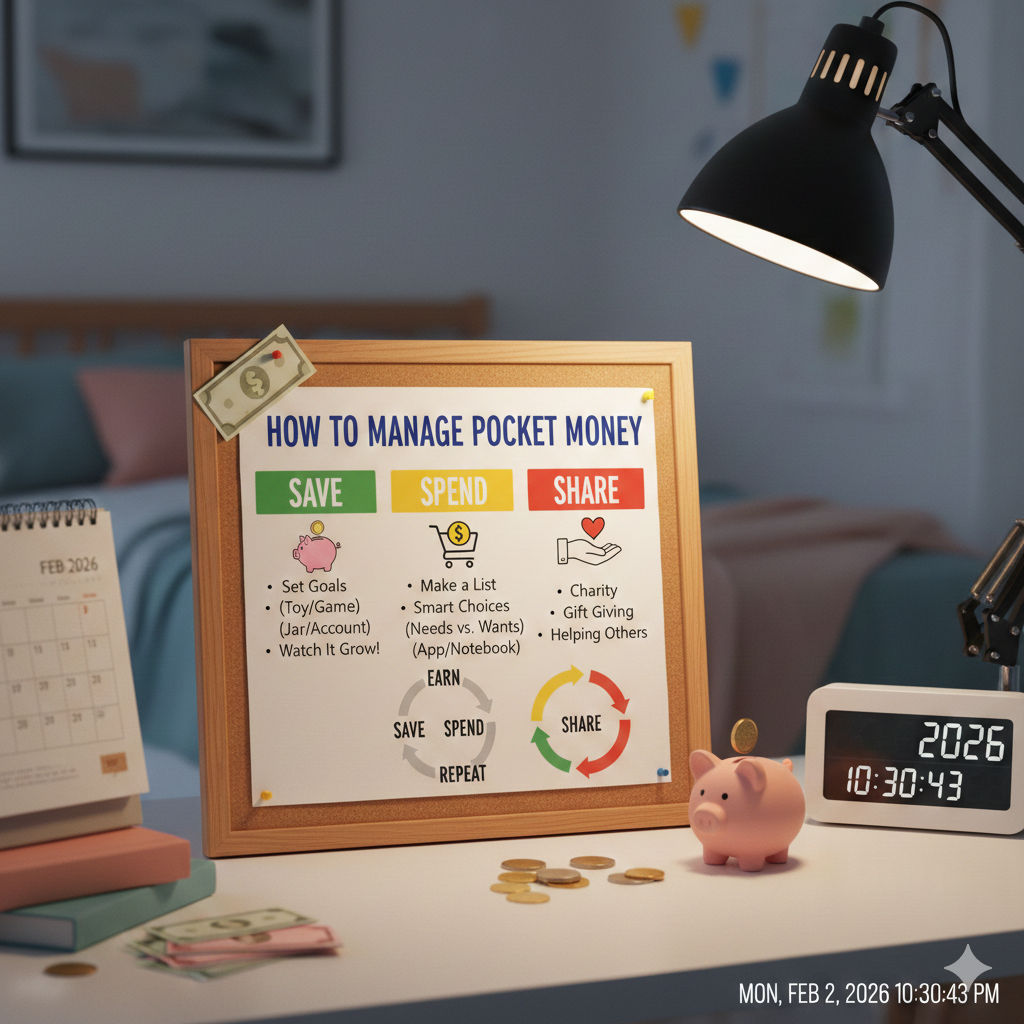
How to Create a Pocket Money Budget
Creating a budget is one of the most effective ways to learn how to manage pocket money. A budget helps students plan how to spend, save, and track their allowance. By dividing money into categories, students can make better decisions and avoid wasting pocket money on unnecessary items.
Simple Pocket Money Budget Example
| Category | Percentage of Pocket Money | Purpose |
| Savings | 30% | Save for future needs or goals |
| Daily Needs | 50% | Food, stationery, transport |
| Wants / Extras | 20% | Snacks, small treats, leisure |
This simple allocation helps students see where their money goes. Learning how to manage pocket money through a structured budget ensures that part of the money is saved, daily needs are met, and small wants are controlled.
Summary
- Budgeting organizes spending
- Ensures money is allocated for savings, needs, and wants
Key Takeaways
- Creating a budget is a practical step in how to manage pocket money
- Structured budgeting builds financial discipline
How to Save Pocket Money Effectively
Saving is a crucial part of learning how to manage pocket money. Even a small portion saved regularly can grow into a significant amount over time. Students should aim to save a fixed percentage of their allowance before spending on other items. This habit teaches discipline and helps prepare for future needs.
Simple Saving Tips
- Save at least 20–30% of pocket money weekly
- Keep money in a separate envelope, box, or small savings jar
- Avoid spending saved money unless necessary
- Set small goals, like buying a book or a school item
By practicing these steps, students can develop a strong understanding of how to manage pocket money and the value of delayed gratification.
Summary
- Saving builds discipline and financial awareness
- Regular savings grow over time and support future goals
Key Takeaways
- Always save a portion of pocket money first
- Set small savings goals to stay motivated
- Learning to save is a key part of managing pocket money
Smart Ways to Spend Pocket Money
Spending wisely is essential when learning how to manage pocket money. Students should plan purchases carefully and focus on essential needs before wants. Thoughtful spending prevents waste and helps money last longer.
Needs vs Wants
- Needs: Items necessary for school or daily life, such as books, stationery, or transport
- Wants: Snacks, toys, games, or leisure items
Tips for Smart Spending
- Make a small list before spending
- Compare prices to get the best value
- Avoid impulse purchases
- Stick to the budget set for wants
By following these strategies, students can control their spending and learn to manage pocket money responsibly.
Summary
- Prioritize needs over wants
- Plan purchases to avoid impulsive spending
Key Takeaways
- Smart spending preserves money for important items
- Careful decision-making is part of managing pocket money
How to Track Pocket Money Expenses
Tracking expenses is a key step in learning how to manage pocket money. Writing down every purchase helps students understand where their money goes and identify areas where they might overspend. Regular tracking builds awareness and improves budgeting skills.
Simple Methods to Track Expenses
- Use a small notebook to record daily spending
- Create a weekly summary to review habits
- Highlight unnecessary purchases to avoid them in the future
- Optionally, use a simple spreadsheet or budget app
Consistent tracking makes learning how to manage pocket money practical and effective. It also encourages accountability and self-discipline.
Summary
- Record all spending to understand the money flow
- Weekly review helps identify patterns and control overspending
Key Takeaways
- Expense tracking improves financial awareness
- Helps students practice how to manage pocket money efficiently
Common Mistakes in Managing Pocket Money
Many students struggle with managing their pocket money because of common mistakes. Recognizing these errors can help avoid financial problems and improve money habits.
Common Mistakes
- Spending all the money at once: Leaves no money for needs or savings
- Not saving anything: Misses the opportunity to build financial discipline
- Buying unnecessary items: Wastes money on wants instead of needs
- Ignoring a budget: Leads to uncontrolled spending
- Not tracking expenses: Prevents understanding of where money goes
Avoiding these mistakes is essential for learning how to manage pocket money effectively and building strong financial habits from an early age.
Summary
- Avoid impulse spending and overspending
- Always save and track expenses
- Follow a simple budget
Key Takeaways
- Mistakes can hinder money management skills
- Awareness of common errors improves how to manage pocket money
Tips to Improve Pocket Money Management
Improving how to manage pocket money requires consistent habits and planning. Students can follow simple tips to make the most of their allowance and build financial responsibility.
Practical Tips
- Set clear goals: Decide what to save for, like books or small gifts
- Stick to a budget: Follow the planned allocation for needs, wants, and savings
- Review weekly: Check spending patterns and adjust if necessary
- Use savings creatively: Reward yourself occasionally without overspending
- Learn from mistakes: Identify errors and plan better next time
By practicing these tips, students can develop a strong understanding of how to manage pocket money and make smart financial decisions.
Summary
- Goal-setting and budgeting improve money management
- Weekly review keeps spending under control
- Learning from mistakes strengthens financial habits
Key Takeaways
- Regular reviews help manage pocket money
- Planning and discipline create lifelong financial skills
Conclusion
Learning how to manage pocket money is an essential skill for students and young people. Proper management teaches budgeting, saving, and responsible spending in a simple, practical way. By tracking expenses, setting budgets, and avoiding common mistakes, students develop financial discipline and decision-making skills. Mastering how to manage pocket money early lays a strong foundation for future financial success and independence.
Frequently Asked Questions (FAQs)
1. What is the best way to manage pocket money?
Creating a budget, saving a portion, tracking expenses, and spending wisely are the best ways to manage pocket money.
2. Why should students learn how to manage pocket money?
Students learn the value of money, develop saving habits, and gain financial responsibility for future independence.
3. How much pocket money should be saved?
Students should save 20–30% of their pocket money regularly to build discipline and meet future goals.
4. Can pocket money help build financial responsibility?
Yes, it teaches budgeting, decision-making, and self-control, which are key aspects of financial responsibility.
5. What mistakes should be avoided in managing pocket money?
Common mistakes include spending all the money at once, not saving, buying unnecessary items, and ignoring a budget.
6. How can students track their pocket money effectively?
By recording all daily expenses in a notebook or spreadsheet and reviewing them weekly, students can monitor their spending and improve their money management.
References
- Consumer Financial Protection Bureau (CFPB) – Money management basics for young people
- OECD – Financial education and youth money skills
- Money Advice Service (UK) – Teaching children and teens about money
- Jump$tart Coalition for Personal Financial Literacy – National standards in financial education
- Investopedia – Budgeting, saving, and personal finance basics
- National Endowment for Financial Education (NEFE) – Youth financial capability research
- Khan Academy – Personal finance concepts for students
 Who Can