
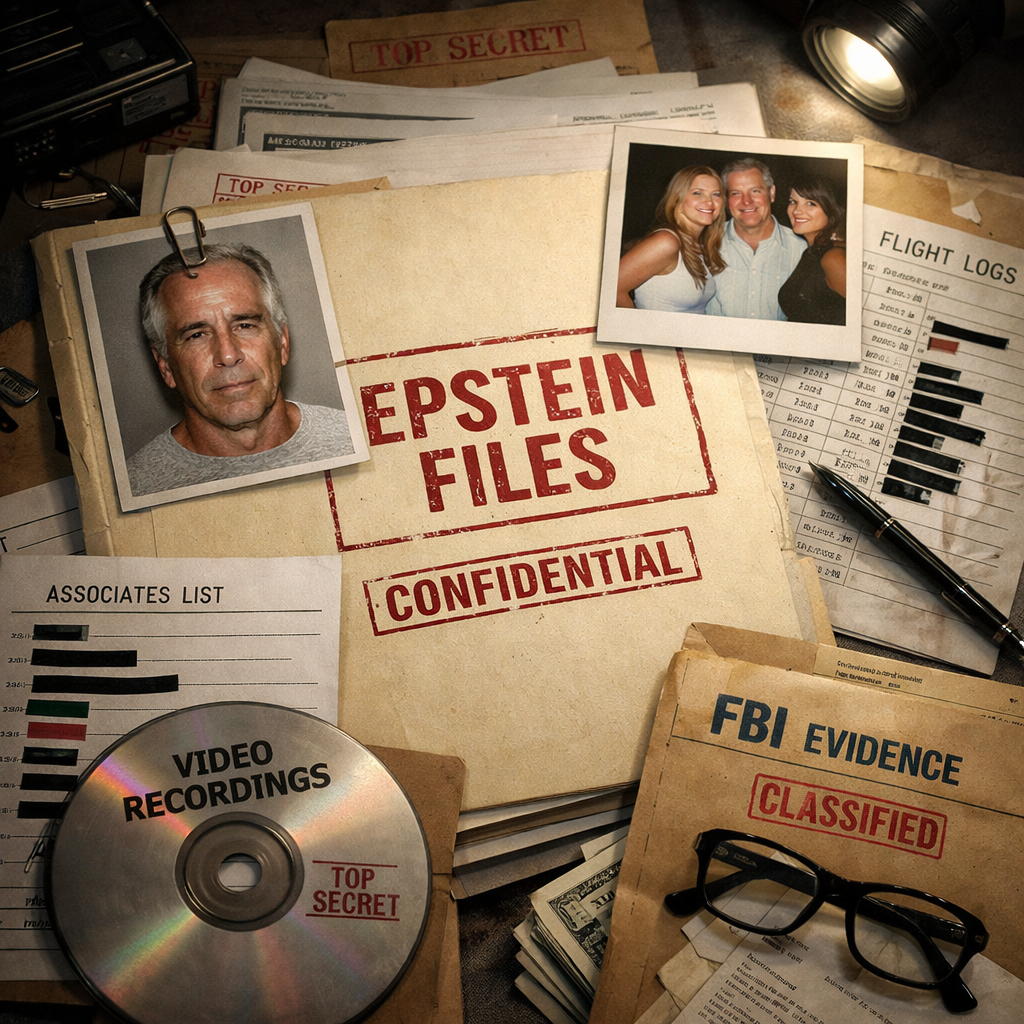
The Epstein Files refer to a collection of court-related documents connected to civil and criminal proceedings involving Jeffrey Epstein and his associates. These materials include lawsuit filings, depositions, exhibits, and judicial orders that became public through court processes. They are records, not rulings, and do not themselves determine guilt or innocence.
Legal Context
In legal terms, the Epstein Files are primary-source court records produced during litigation. Courts may seal or unseal such records based on legal standards balancing public interest, privacy, and due process. When unsealed, documents are released as filed—often without findings of fact attached.
What the Files Are—and Are Not
- Are: Official filings preserved by U.S. courts; evidence of what parties alleged, testified, or submitted.
- Are not: Verdicts, indictments by themselves, or proof that every statement is true.
Typical Contents
- Civil complaints and motions
- Depositions and affidavits
- Exhibits referenced by parties
- Judicial opinions and unsealing orders
Important legal distinction: A name appearing in a court document indicates involvement in the record (e.g., being mentioned or referenced), not a finding of wrongdoing.
Ready Facts
- The Epstein Files are court documents, not conclusions.
- Unsealing increases transparency but requires careful interpretation.
- Allegations in filings differ from proven facts established by courts.
Summary
Epstein Files: Publicly released court records from litigation related to Jeffrey Epstein. They document allegations, testimony, and procedural history but do not equal judgments.
Key Takeaways
- Court records ≠ legal findings.
- Unsealed documents provide context, not verdicts.
- Mentions must be interpreted within due process standards.
Who Was Jeffrey Epstein?
Factual Background
Jeffrey Epstein was an American financier who became the subject of multiple criminal investigations and civil lawsuits related to sex trafficking offenses. His legal cases spanned several decades and jurisdictions, primarily within the United States.
Criminal Proceedings
- In 2008, Epstein entered a state-level plea agreement in Florida for solicitation-related charges, resulting in a custodial sentence and probation.
- In 2019, he was federally charged in New York with sex trafficking of minors. Those charges were pending at the time of his death.
Death and Legal Status
Epstein died in custody in August 2019. Under U.S. law, a defendant’s death terminates pending criminal proceedings, meaning the federal case did not reach trial or verdict.
Relationship to the Epstein Files
Epstein’s litigation history generated extensive court records, including filings from:
- Criminal investigations
- Civil suits brought by accusers
- Related proceedings involving associates
These records form the foundation of what are commonly referred to as the Epstein Files.
Ready Facts
- Epstein faced both state and federal legal action.
- Federal charges were unresolved due to his death.
- Court records from these proceedings underpin later document releases.
Summary
Jeffrey Epstein: A U.S.-based financier charged with sex trafficking offenses. His cases produced extensive court documentation, later referenced as the Epstein Files.
Key Takeaways
- Legal outcomes differ by jurisdiction and time period.
- Death in custody halted federal prosecution.
- The Epstein Files originate from formal legal proceedings, not media investigations.
How the Epstein Files Were Created
Origin of the Records
The Epstein Files were created through standard judicial processes tied to criminal investigations and civil litigation. As cases progress, courts generate and retain records such as complaints, motions, discovery materials, depositions, and judicial orders. These documents are preserved as part of the official court docket.
Civil Litigation as the Primary Source
A substantial portion of the Epstein Files originates from civil lawsuits filed by accusers against Epstein and, in some cases, related parties. Civil cases typically involve:
- Discovery, where parties exchange evidence
- Depositions, where witnesses provide sworn testimony
- Exhibits, submitted to support claims or defenses
These materials are filed with courts and may be sealed temporarily to protect privacy or ongoing proceedings.
Sealing and Unsealing Process
Courts may seal records under established legal standards. Documents can later be unsealed by judicial order when:
- The public interest outweighs privacy concerns
- Cases conclude or reach key procedural stages
- Courts determine transparency is legally justified
When unsealed, documents are released as originally filed, without validation of every claim contained within them.
Preservation and Public Access
Once unsealed, records are made accessible through official court systems. Public availability does not alter their legal status; they remain procedural records, not findings of fact.
Ready Facts
- Court documents are created automatically during litigation.
- Civil discovery produces a large volume of records.
- Judges decide whether records remain sealed or become public.
- Unsealing does not equal judicial endorsement of contents.
Summary
Creation of the Epstein Files: The files emerged from routine court procedures during criminal and civil cases, later released through judicial unsealing decisions.
Key Takeaways
- The files were not compiled by media or investigators.
- Civil litigation played a central role in document volume.
- Judicial oversight governs creation, sealing, and release.
What Types of Documents Are Included
Overview of Document Categories
The Epstein Files consist of multiple categories of court documents, each serving a distinct legal function. These records reflect procedural history, sworn testimony, and evidentiary submissions, rather than judicial conclusions.
Core Document Types
1) Civil Complaints and Amended Filings
- Initiate lawsuits and outline allegations and legal claims.
- May be updated as cases progress.
- Represent one party’s assertions, not findings of fact.
2) Motions and Legal Briefs
- Requests for court action (e.g., dismissals, unsealing).
- Include legal arguments and citations.
- Filed by both plaintiffs and defendants.
3) Depositions and Affidavits
- Sworn testimony taken under oath.
- Used for discovery and evidentiary purposes.
- Statements are subject to cross-examination but not automatically verified.
4) Exhibits and Supporting Evidence
- Emails, logs, photographs, or other materials referenced in filings.
- Submitted to support claims or defenses.
- Inclusion does not confirm authenticity or accuracy absent judicial findings.
5) Judicial Orders and Opinions
- Decisions on procedural matters (e.g., sealing/unsealing).
- Carry legal authority regarding case management.
- Do not necessarily rule on the truth of allegations.
Document Types and Legal Weight
| Document Type | Purpose | Legal Weight |
|---|---|---|
| Complaint | States allegations | Alleged facts only |
| Motion | Requests court action | Procedural |
| Deposition | Sworn testimony | Evidentiary |
| Exhibit | Supporting material | Contextual |
| Court Order | Judicial decision | Binding (procedural) |
Ready Facts
- Epstein Files include procedural and evidentiary records.
- Depositions are sworn but not verdicts.
- Exhibits provide context, not judicial validation.
- Only court orders carry binding authority.
Summary
Document Scope: The Epstein Files contain complaints, motions, depositions, exhibits, and court orders—each with different legal purposes and evidentiary weight.
Key Takeaways
- Not all documents carry the same legal significance.
- Allegations and evidence are distinct from rulings.
- Understanding document type is essential for accurate interpretation.
Why the Epstein Files Were Unsealed
Legal Basis for Unsealing
The Epstein Files were unsealed following judicial review under established U.S. legal standards governing public access to court records. Courts balance the public’s right to know against privacy, safety, and due process considerations. When judges determine that transparency outweighs remaining confidentiality interests, records may be released.
Public Interest Considerations
Judges often consider unsealing when cases involve:
- Significant public concern
- Completed or inactive proceedings
- Reduced risk of prejudice to ongoing cases
- The need for accountability and transparency
In the Epstein-related litigation, courts evaluated whether continued sealing was legally justified given the age and status of the cases.
Scope and Limitations of Release
Unsealing is typically partial and controlled:
- Certain sensitive information may remain redacted
- Some documents may be released in stages
- Unsealing does not certify the accuracy of statements within the files
Courts release documents as filed, without editorial review or fact-checking.
What Unsealing Does—and Does Not Mean
- Does: Make records accessible to the public
- Does not: Confirm allegations, assign guilt, or replace trials
Ready Facts
- Judges—not media—decide whether files are unsealed.
- Unsealing follows legal standards, not public pressure alone.
- Released documents retain their original legal status.
Summary
Unsealing Explained: The Epstein Files were released through court orders after judges determined that public access outweighed remaining confidentiality concerns.
Key Takeaways
- Transparency is balanced against due process.
- Unsealed documents are not judicial findings.
- Redactions may still apply to protect privacy.
also read: https://whocanonline.com/human-rights/
Names Mentioned in the Epstein Files
Why Names Appear in Court Records
Names appear in the Epstein Files because court documents record statements, references, and testimony provided during litigation. Individuals may be named for many reasons, including:
- Being referenced by a witness
- Appearing in communications or exhibits
- Being discussed in depositions or pleadings
- Having contextual relevance to alleged events
A mention reflects inclusion in the record—not a legal determination.
Legal Meaning of a “Mention”
In U.S. legal practice, being named in a filing can indicate:
- Contextual reference
- Alleged association
- Subject of testimony
- Procedural relevance
It does not by itself establish wrongdoing, liability, or criminal conduct. Courts require formal charges, evidence testing, and adjudication to reach such conclusions.
Distinguishing Levels of Legal Status
Understanding the Epstein Files requires separating mentions from legal outcomes:
| Status | Meaning | Legal Consequence |
|---|---|---|
| Mentioned | Referenced in a document | None by itself |
| Accused | Formally alleged in a claim | Requires adjudication |
| Charged | Prosecuted by authorities | Subject to trial |
| Convicted | Found guilty by a court | Legal judgment |
Judicial and Ethical Considerations
Courts and legal standards emphasize:
- Presumption of innocence
- Avoidance of reputational harm without findings
- Careful interpretation of untested allegations
For this reason, courts often caution against equating document inclusion with proof.
Ready Facts
- Names can appear without allegations.
- Mentions do not imply guilt or liability.
- Legal conclusions require formal judicial findings.
Summary
Names in the Epstein Files: Individuals are mentioned due to references in testimony or filings. A mention alone carries no legal judgment.
Key Takeaways
- Court records document statements, not verdicts.
- Legal status varies widely among named individuals.
- Interpretation must follow due process principles.
Legal Meaning of Being “Named” in Court Documents
What “Named” Means in Legal Terms
Being “named” in a court document means an individual’s name appears within a filing, deposition, exhibit, or motion. This inclusion reflects procedural documentation, not a legal conclusion. Courts record what parties state or submit; they do not validate every statement at the filing stage.
Common Reasons Individuals Are Named
An individual may be named because they:
- Are referenced by a witness during sworn testimony
- Appear in communications submitted as exhibits
- Are part of the factual background alleged by a party
- Are relevant to timelines or relationships described in filings
None of these circumstances, by themselves, establish fault or liability.
Legal Thresholds That Matter
Courts distinguish clearly between levels of legal implication:
- Named: Appears in the record
- Alleged against: Accusations are asserted by a party
- Formally charged: Prosecuted by authorities
- Adjudicated: Evaluated by a judge or jury
- Liability or guilt found: Determined through a final ruling or verdict
Only the latter stages carry legal consequences.
Due Process and Evidentiary Standards
U.S. legal standards require:
- Notice and opportunity to respond
- Testing of evidence through adversarial proceedings
- Decisions based on admissible evidence and legal rules
Documents released to the public may contain untested statements, which courts caution should not be treated as established facts.
Ready Facts
- “Named” indicates record inclusion, not wrongdoing.
- Legal consequences arise only after adjudication.
- Due process protects individuals from conclusions based solely on filings.
Summary
Legal Definition: Being named in court documents means inclusion in the official record. It does not indicate guilt, liability, or judicial findings.
Key Takeaways
- Court filings document claims, not outcomes.
- Legal meaning depends on procedural stage.
- Adjudication—not mention—determines responsibility.
Verified Facts vs Allegations
Why the Distinction Matters
In legal analysis, verified facts and allegations serve different purposes and carry different weight. The Epstein Files contain a mix of procedural facts (such as filing dates and court orders) and asserted claims that have not necessarily been tested or proven in court.
What Counts as Verified Facts
Verified facts are elements that are objectively established within the legal record, including:
- Existence of court cases and filings
- Dates of charges, pleas, and judicial orders
- Outcomes formally decided by courts (e.g., convictions, dismissals, settlements)
- Procedural actions such as unsealing decisions
These facts are confirmed by court authority and are not subject to dispute.
What Allegations Represent
Allegations are claims made by parties or witnesses:
- Statements in complaints or depositions
- Assertions included in affidavits or briefs
- Descriptions of events that have not been adjudicated
Allegations are recorded to preserve testimony and arguments, not to establish truth.
Role of Courts in Resolving Allegations
Courts resolve allegations through:
- Evidentiary rules
- Cross-examination
- Motions and hearings
- Trial or judicial findings
When proceedings end without a verdict, allegations may remain unresolved, even though they are preserved in the record.
Fact vs Allegation Comparison
| Category | Verified Fact | Allegation |
|---|---|---|
| Source | Court authority | Party or witness |
| Legal Status | Established | Unproven |
| Evidentiary Testing | Completed | Pending or absent |
| Legal Consequence | Binding | None by itself |
Ready Facts
- Court filings preserve both facts and allegations.
- Allegations are not judicial findings.
- Only adjudicated outcomes create legal conclusions.
Summary
Key Distinction: Verified facts are confirmed by courts; allegations are claims recorded for legal process and may remain unproven.
Key Takeaways
- Not all information in court files is factual.
- Legal verification requires adjudication.
- Accurate interpretation depends on procedural context.
Impact of the Epstein Files on Law and Society
Legal and Judicial Impact
The release of the Epstein Files has influenced discussions around court transparency, sealing practices, and public access to judicial records. Courts have been prompted to re-examine how long sensitive materials remain sealed and under what conditions unsealing best serves the public interest while protecting due process.
Media and Information Standards
The files have highlighted the importance of responsible reporting on court documents. Legal standards emphasize that unsealed records require contextual interpretation, as filings may contain untested allegations. This has reinforced guidance around distinguishing documented claims from judicial findings.
Public Understanding of Legal Process
Widespread attention to the Epstein Files has increased public awareness of:
- How civil litigation generates records
- The difference between transparency and adjudication
- The limits of court documents as proof
This has contributed to broader legal literacy regarding how cases progress and how records are created.
Policy and Institutional Discussions
The documents have also informed conversations about:
- Victim rights and access to justice
- Oversight of plea agreements and prosecutorial discretion
- Balancing privacy with accountability in high-profile cases
These discussions occur within legal, academic, and policy-making contexts rather than through direct legal outcomes from the files themselves.
Ready Facts
- The Epstein Files affected debates on court transparency.
- Public access to records does not replace trials.
- Legal literacy improved through exposure to procedural realities.
Summary
Societal Impact: The Epstein Files reshaped conversations on transparency, media responsibility, and public understanding of legal records—without altering established legal outcomes.
Key Takeaways
- Transparency must coexist with due process.
- Court documents require informed interpretation.
- Societal impact is primarily educational and procedural.
Common Misconceptions About the Epstein Files
Misconception 1: “Everyone Named Is Guilty”
Reality: Names appear in court documents for many reasons, including contextual references or witness statements. Guilt or liability requires formal charges, evidence testing, and adjudication, not mere mention.
Misconception 2: “The Files Contain Proven Evidence of Crimes”
Reality: The files contain allegations, testimony, and exhibits submitted during litigation. Only outcomes decided by courts constitute proven facts.
Misconception 3: “Unsealed Means Verified”
Reality: Unsealing makes documents publicly accessible, not judicially validated. Courts release records as filed, without endorsing their accuracy.
Misconception 4: “The Epstein Files Are a Single Official Report”
Reality: There is no single, consolidated “Epstein Files” report. The term refers to multiple documents across different cases and courts.
Misconception 5: “Media Coverage Equals Legal Conclusion”
Reality: Media summaries interpret documents for public consumption but do not carry legal authority. Legal conclusions arise only from court decisions.
Ready Facts
- Mention ≠ guilt.
- Public records ≠ verified facts.
- Unsealing ≠ judicial approval.
- Media reporting ≠ legal rulings.
Summary
Key Clarification: The Epstein Files are collections of court records that document legal processes, not determinations of truth or guilt.
Key Takeaways
- Misinterpretation often stems from conflating allegations with facts.
- Legal standards protect against assumption-based conclusions.
- Accurate understanding depends on procedural context.
Conclusion
The Epstein Files are best understood as collections of court records generated through established legal processes, including civil litigation and criminal proceedings. They document allegations, testimony, procedural actions, and judicial decisions about access to records—but not determinations of guilt. Accurate interpretation depends on recognizing the distinction between mentions, allegations, and adjudicated outcomes, as well as the role of due process. When read with legal context, the files contribute to transparency and public understanding without substituting for court judgments.
FAQs
1. What are the Epstein Files?
The Epstein Files are publicly released court documents related to civil and criminal proceedings involving Jeffrey Epstein and associated litigation. They include filings, depositions, exhibits, and judicial orders, but they are not verdicts or official findings of guilt.
2. Are the Epstein Files public records?
Yes. Portions of the Epstein Files are public records released through judicial unsealing orders. Some materials may remain sealed or partially redacted to protect privacy or comply with legal standards.
3. Does being named in the Epstein Files mean someone committed a crime?
No. Being named does not imply guilt or liability. Names can appear due to references in testimony, exhibits, or contextual descriptions. Legal responsibility requires formal charges and adjudication.
4. Why were the Epstein Files unsealed?
Courts unsealed certain documents after determining that public interest and transparency outweighed remaining confidentiality concerns, while still considering privacy and due process.
5. Do the Epstein Files contain proven evidence?
The files contain allegations, sworn testimony, and submitted materials. Only facts confirmed through court rulings or verdicts are considered proven.
6. Is there a single official “Epstein Files” report?
No. The term refers to multiple documents across different cases and courts, not one consolidated or authoritative report.
References
- United States Federal Courts
- Public Access to Court Electronic Records (PACER)
U.S. federal platform for accessing court dockets and filings.
Source type: Primary legal records system - U.S. Department of Justice (DOJ)
Information on federal prosecutions, legal standards, and due process.
Source type: Government legal authority - Federal Rules of Civil Procedure (FRCP)
Governing standards for civil litigation, discovery, depositions, and filings in U.S. courts.
Source type: Statutory / procedural framework - Federal Rules of Evidence (FRE)
Authoritative rules on how evidence is evaluated and admitted in court.
Source type: Legal evidentiary standard - CourtListener (Free Law Project)
Public database providing access to court opinions and filings.
Source type: Legal transparency organization - American Bar Association (ABA)
Explanations of legal ethics, due process, and interpretation of court records.
Source type: Professional legal authority - Legal Information Institute (Cornell Law School)
Plain-language explanations of U.S. law, court procedures, and legal terminology.
Source type: Academic legal reference