
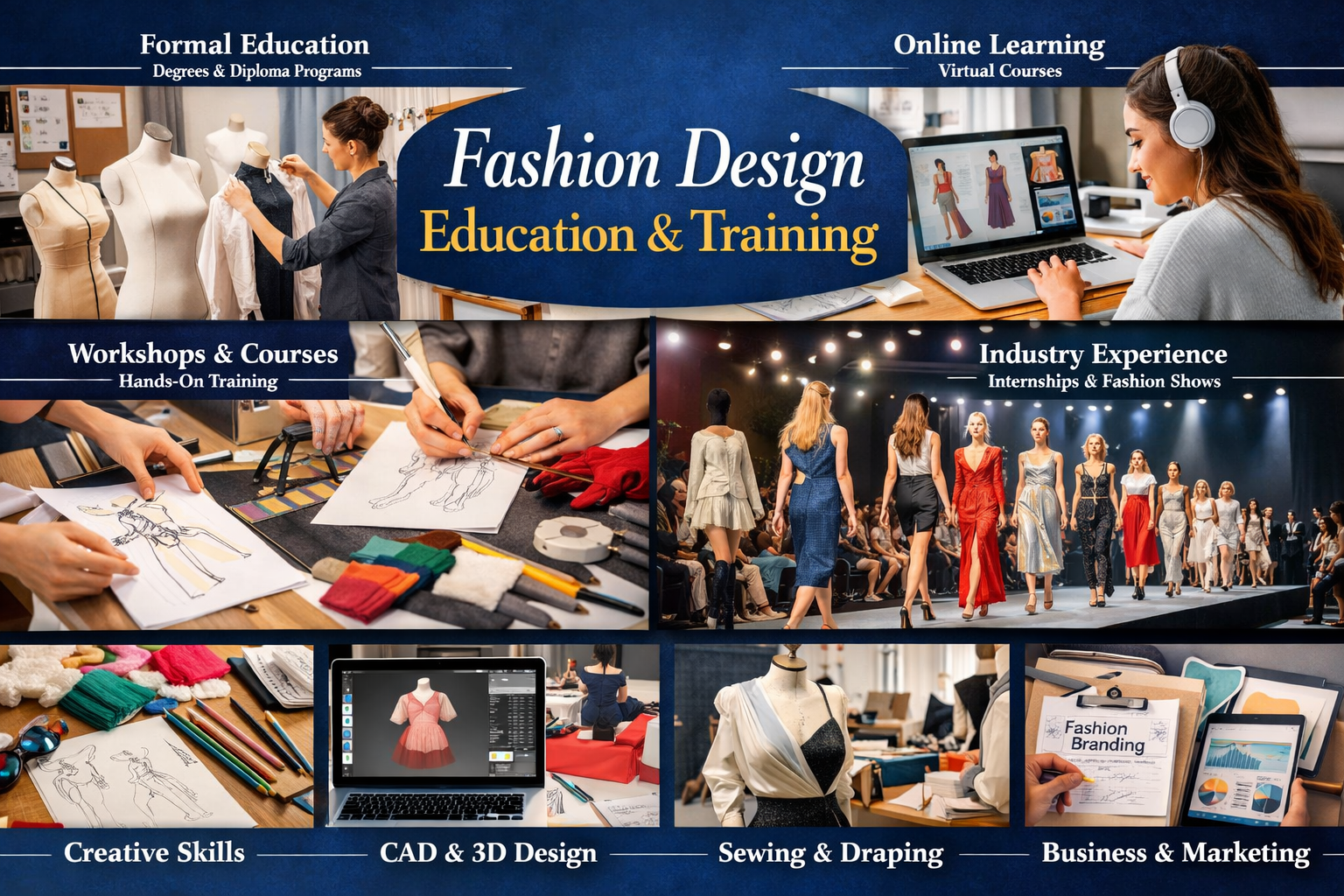
Fashion design is the art and practice of creating clothing and accessories, combining creativity, aesthetics, functionality, and cultural trends. It involves conceptualizing ideas, selecting fabrics, designing patterns, and constructing garments to produce wearable art. Designers aim to balance style, comfort, and innovation while considering market demand and sustainability (According to industry standards).
Key Components of Fashion Design:
- Creativity & Conceptualization: Generating original ideas for clothing and accessories.
- Research & Trend Analysis: Understanding current and upcoming fashion trends, consumer preferences, and cultural influences.
- Fabric & Material Selection: Choosing textiles that meet design, quality, and sustainability standards.
- Pattern Making & Garment Construction: Translating sketches into physical clothing through technical processes.
- Presentation & Marketing: Showcasing designs via collections, runway shows, or digital platforms.
Mini Summary
- Fashion design = art + function + trend
- Core stages: idea → sketch → fabric → pattern → garment → showcase
- Designers work across haute couture, ready-to-wear, and mass-market fashion
Bullet Facts:
- Fashion design combines creativity, functionality, and trend-awareness.
- It includes research, sketching, fabric selection, pattern making, and garment construction.
- Designers can specialize in clothing, accessories, footwear, or digital fashion.
- It balances aesthetic appeal, usability, and market trends.
Key Takeaways:
- Fashion design is both an artistic and technical discipline.
- Every garment starts with a concept and evolves through multiple technical stages.
- It is influenced by culture, technology, and sustainability trends.
Common Misconceptions:
History and Evolution of Fashion Design
Fashion design is not only an art but also a reflection of society, culture, and technology over time. Understanding its history provides insights into how current trends, tools, and industry standards have developed. The evolution of fashion design can be traced across several eras, each influencing style, production methods, and consumer behavior (As documented by leading fashion historians).
1. Ancient Civilizations (Before 5th Century AD)
- Clothing was primarily functional, protecting from climate and environment.
- Materials: linen (Egypt), wool (Mesopotamia), cotton (India), silk (China).
- Embellishments included beads, embroidery, and symbolic patterns, reflecting status, profession, or cultural identity.
- Tailoring was minimal; most garments were draped, wrapped, or tied.
2. Middle Ages (5th–15th Century)
- Fashion became a symbol of social hierarchy.
- Nobility wore luxurious fabrics like silk, velvet, and brocade, while peasants used simpler materials.
- Early tailoring techniques appeared, including fitted sleeves and bodices.
- Sumptuary laws often regulated who could wear certain fabrics or colors.
3. Renaissance Era (14th–17th Century)
- Fashion embraced artistic expression and cultural identity.
- Garments became more structured and tailored, with emphasis on proportion, symmetry, and decoration.
- Emergence of fashion influencers, including royal courts and artists, who set trend standards.
- Early fashion sketches and pattern drafting methods began to appear.
4. 18th–19th Century: Birth of Modern Fashion Design
- Fashion houses like that of Rose Bertin (Marie Antoinette’s designer) formalized design as a profession.
- Haute couture emerged in Paris, creating custom-fitted, high-end garments.
- Sewing machines in the 19th century revolutionized garment production, making it faster and more precise.
- Industrialization expanded access to ready-to-wear clothing.
5. 20th Century: Globalization and Mass Fashion
- Early 1900s: Designers like Coco Chanel introduced practical, stylish garments for modern women.
- Mid-century: Christian Dior’s “New Look” redefined post-war fashion with full skirts and fitted waists.
- Mass production allowed fashion to reach a wider audience, creating department stores and global brands.
- Fashion magazines and media influenced trends on a global scale.
6. 21st Century: Digital, Sustainable, and Inclusive Fashion
- Rise of fast fashion brands like Zara and H&M brought trends to consumers quickly.
- Digital tools: 3D modeling, CAD software, and virtual fashion shows.
- Sustainable and ethical fashion gained importance due to environmental concerns.
- Globalization and social media allow instant trend adoption and cultural exchange.
- Fashion design now includes digital clothing, NFTs, and AI-generated designs.
Mini Summary
- Fashion design evolved from functional clothing → status symbols → haute couture → mass-market → digital & sustainable fashion.
- Key influencers: royalty, early designers, industrialization, and modern technology.
- Current fashion is fast, digital, sustainable, and globally connected.
Bullet Facts:
- Ancient clothing focused on function, natural fibers, and cultural symbolism.
- Middle Ages emphasized status, luxury fabrics, and social regulations.
- Renaissance introduced artistic tailoring and fashion sketches.
- 18th–19th century saw the birth of professional designers and haute couture.
- 20th century brought mass production, global brands, and media influence.
- 21st century focuses on digital fashion, sustainability, and AI-assisted design.
Key Takeaways:
- Fashion design reflects societal, technological, and cultural evolution.
- Understanding history is essential for predicting trends and innovating designs.
- Modern fashion is inclusive, sustainable, and technologically advanced.
Common Misconceptions:
- Fashion design is only about clothing aesthetics; it includes technology, ethics, and market awareness.
- Haute couture is not the entirety of fashion history; mass-market and digital fashion are equally influential today.
Fashion Design Process: Step-by-Step Guide
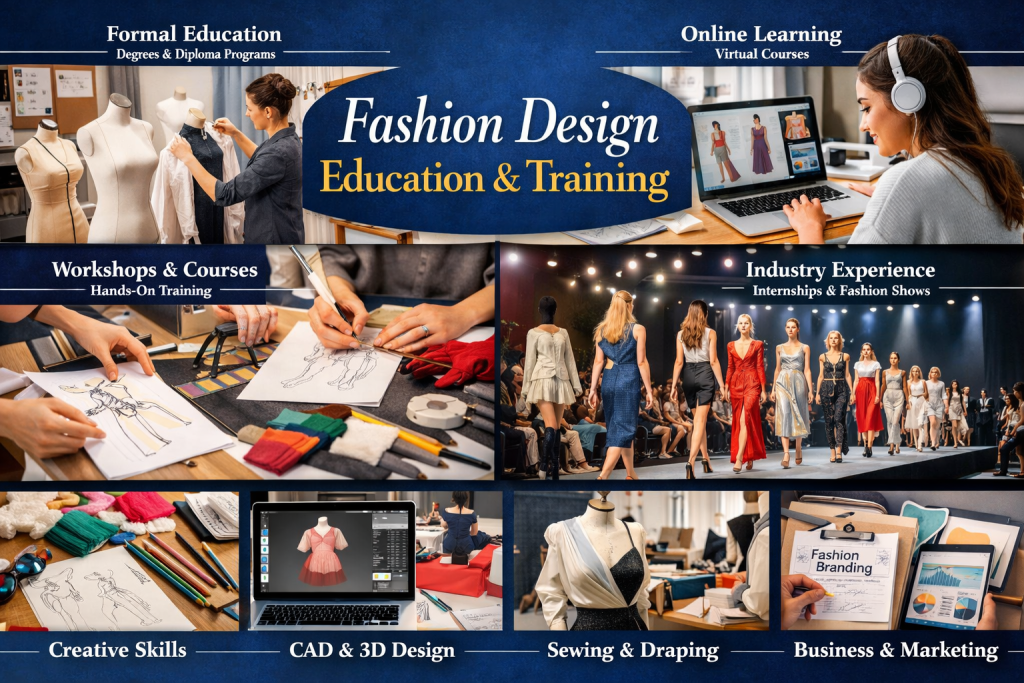
The fashion design process is a structured workflow that transforms an idea into a finished garment or collection. It combines creativity, technical skills, material knowledge, and market understanding. Each stage ensures that the design is not only aesthetically appealing but also functional, wearable, and market-ready (According to industry standards).
Step 1: Research and Inspiration
- Purpose: Understand trends, target audience, culture, and consumer needs.
- Activities:
- Trend analysis via fashion magazines, websites, and social media.
- Mood boards, color palettes, and style research.
- Study of fabrics, patterns, and cultural influences.
- Tools: Pinterest, Adobe Capture, trend forecasting platforms like WGSN.
Step 2: Sketching and Conceptualization
- Purpose: Translate ideas into visual designs.
- Activities:
- Freehand sketches or digital illustrations.
- Detailing garment shape, silhouette, and embellishments.
- Concept boards combining colors, textures, and inspiration.
- Tools: Adobe Illustrator, CorelDRAW, Procreate.
Step 3: Fabric Selection and Material Sourcing
- Purpose: Choose materials that align with the design’s look, feel, and durability.
- Activities:
- Selecting fabrics, trims, and threads.
- Testing material for texture, weight, and drape.
- Sourcing sustainable or ethically produced materials (if applicable).
- Tools: Fabric swatches, textile databases, supplier catalogs.
Step 4: Pattern Making and Draping
- Purpose: Convert sketches into precise templates for garment construction.
- Activities:
- Drafting patterns on paper or digitally.
- Draping fabric on mannequins to test fit and silhouette.
- Adjusting designs for size variations.
- Tools: CAD software, dress forms, rulers, pattern paper, draping pins.
Step 5: Garment Construction
- Purpose: Assemble the final garment according to the design specifications.
- Activities:
- Cutting fabric using patterns.
- Sewing and finishing seams.
- Adding embellishments, buttons, zippers, and trims.
- Tools: Sewing machines, sergers, pressing tools, hand sewing kits.
Step 6: Final Presentation and Collection Launch
- Purpose: Showcase designs for marketing, sales, or exhibitions.
- Activities:
- Fitting sessions and adjustments.
- Fashion shows, photo shoots, or digital presentations.
- Collecting feedback for improvement or production scaling.
- Tools: Runway staging, digital lookbooks, social media, and e-commerce platforms.
Step-by-Step Table:
| Step | Purpose | Key Activities | Tools |
|---|---|---|---|
| 1. Research & Inspiration | Trend & audience understanding | Mood boards, trend analysis | Pinterest, WGSN |
| 2. Sketching & Conceptualization | Visualize design ideas | Sketches, concept boards | Adobe Illustrator, Procreate |
| 3. Fabric Selection | Choose suitable materials | Fabric testing & sourcing | Swatches, supplier catalogs |
| 4. Pattern Making & Draping | Create templates & test fit | Drafting patterns, draping | CAD software, dress forms |
| 5. Garment Construction | Assemble final design | Sewing, finishing, embellishments | Sewing machines, sergers |
| 6. Final Presentation | Showcase & market designs | Runway, digital presentations | Social media, lookbooks |
Mini Summary
- Fashion design follows 6 core steps: research, sketching, fabric selection, pattern making, construction, presentation.
- Each stage ensures creativity, functionality, and market readiness.
- Modern designers often combine traditional and digital tools at every stage.
Bullet Facts:
- The fashion design process transforms concepts into garments through a structured workflow.
- Six main steps: Research → Sketch → Fabric → Pattern → Garment → Presentation.
- Designers use both traditional tools (sewing, draping) and digital tools (CAD, illustration software).
- Final designs must meet aesthetic, functional, and market requirements.
Key Takeaways:
- Fashion design is a multi-step process combining creativity and technical skills.
- Modern designers leverage digital and traditional methods simultaneously.
- Proper execution at each stage ensures high-quality, wearable, and market-ready designs.
Common Misconceptions:
- Fashion design is not just sketching; each step requires technical precision and material knowledge.
- Garment construction is more than sewing; it includes pattern fitting, finishing, and presentation.
also read: Fashion Designing Ideas for Beginners | Simple Clothing Design Concepts
Types of Fashion Design
Fashion design is a diverse field with multiple specializations. Each type focuses on different target audiences, production methods, and creative approaches. Understanding these types helps designers choose career paths and allows consumers to identify styles and trends (Based on industry standards).
1. Haute Couture
- Definition: Custom-made, high-end fashion created for individual clients.
- Characteristics:
- Handcrafted garments with exquisite detail and luxury fabrics.
- Limited production; designs are often one-of-a-kind.
- Follows strict standards set by the Chambre Syndicale de la Haute Couture in Paris.
- Examples: Chanel, Dior, Givenchy
- Pros: Ultimate creativity, prestige, exclusivity
- Cons: Extremely expensive, limited market
2. Ready-to-Wear (Prêt-à-Porter)
- Definition: Fashion designed for retail sale in standard sizes, bridging haute couture and mass-market fashion.
- Characteristics:
- Produced in smaller collections with high-quality materials.
- Follows seasonal trends; available in stores globally.
- Examples: Gucci, Prada, Louis Vuitton
- Pros: Accessible luxury, high-quality craftsmanship
- Cons: Less customization than haute couture
3. Mass-Market Fashion
- Definition: Affordable, widely available clothing produced for the general public.
- Characteristics:
- Focus on trend replication, affordability, and large-scale production.
- Uses fast fashion techniques to quickly respond to market trends.
- Examples: H&M, Zara, Uniqlo
- Pros: Affordable, trend-driven, accessible
- Cons: Less durable, environmental concerns
4. Accessory Design
- Definition: Designing fashion items beyond clothing, such as bags, jewelry, hats, and belts.
- Characteristics:
- Focuses on style, utility, and complementing clothing.
- Often requires specialized materials and craftsmanship.
- Examples: Louis Vuitton handbags, Tiffany jewelry
- Pros: Niche specialization, creative freedom
- Cons: Smaller market compared to apparel
5. Footwear Design
- Definition: Creation of functional and fashionable footwear.
- Characteristics:
- Combines ergonomics, materials, and aesthetics.
- May overlap with sportswear, casual, and luxury fashion.
- Examples: Nike, Christian Louboutin, Adidas
- Pros: Combines creativity with functionality
- Cons: Requires technical expertise in materials and comfort
6. Digital / Virtual Fashion Design
- Definition: Designing virtual clothing and accessories for digital platforms, gaming, or NFTs.
- Characteristics:
- No physical production; entirely digital.
- Used in metaverse fashion, social media, and digital marketing.
- Pros: Sustainable, innovative, global reach
- Cons: Lacks physical wearability, requires tech skills
Comparison Table of Fashion Design Types:
| Type | Definition | Example | Pros | Cons |
|---|---|---|---|---|
| Haute Couture | Custom, luxury clothing | Chanel, Dior | Prestige, exclusivity | Very expensive, limited market |
| Ready-to-Wear | Retail-ready, seasonal collections | Gucci, Prada | Accessible luxury | Less customization |
| Mass-Market | Affordable, widely available | Zara, H&M | Trendy, accessible | Less durable, eco concerns |
| Accessory Design | Bags, jewelry, belts | Tiffany, Louis Vuitton | Creative niche | Smaller market |
| Footwear Design | Functional and stylish shoes | Nike, Louboutin | Combines style & comfort | Technical expertise needed |
| Digital Fashion | Virtual clothing & NFTs | RTFKT, Digital avatars | Sustainable, innovative | No physical wearability |
Mini Summary :
- Fashion design spans haute couture, ready-to-wear, mass-market, accessories, footwear, and digital fashion.
- Each type has unique target markets, creative focus, and production methods.
- Understanding types helps career planning and consumer choice.
Bullet Facts:
- Haute couture = custom luxury garments, one-of-a-kind.
- Ready-to-wear = seasonal retail collections, high quality.
- Mass-market = affordable, trend-driven, large-scale production.
- Accessories = bags, jewelry, hats complementing fashion.
- Footwear = combines style, ergonomics, and materials.
- Digital fashion = virtual clothing for gaming, metaverse, or NFTs.
Key Takeaways:
- Fashion design is diverse and specialized, offering multiple career and creative paths.
- Each type balances creativity, market demand, and technical execution.
- Modern fashion increasingly blends physical and digital design.
Common Misconceptions:
- Haute couture is not the only prestigious fashion; ready-to-wear and digital fashion also influence trends.
- Mass-market fashion is not “low-skill”; designers must balance trends, cost, and production speed.
Education and Career Path in Fashion Design
A career in fashion design combines creativity, technical skills, and business knowledge. Education plays a vital role in providing designers with the foundational skills, industry exposure, and professional networks needed to succeed in a competitive global market (According to leading fashion institutes).
1. Fashion Design Degrees and Certifications
- Undergraduate Programs:
- Bachelor of Fine Arts (BFA) in Fashion Design – Focus on garment construction, pattern making, and sketching.
- Bachelor of Arts (BA) in Fashion Design or Fashion Merchandising – Combines design with business skills.
- Postgraduate Programs:
- Master’s in Fashion Design or Fashion Innovation – Advanced studies in creative and technical areas, trend forecasting, and sustainable fashion.
- Short-Term Certifications & Courses:
- Digital fashion design, CAD software, textile studies, pattern making, accessory design.
- Top Institutes:
- Parsons School of Design (USA), London College of Fashion (UK), Istituto Marangoni (Italy), NIFT (India)
2. Internships and Apprenticeships
- Purpose: Gain real-world experience, build a portfolio, and network with industry professionals.
- Activities:
- Assisting senior designers, garment production, trend research, and fashion shows.
- Benefits:
- Hands-on experience, industry mentorship, and potential job opportunities.
3. Career Opportunities in Fashion Design
- Apparel Designer: Designing clothing lines for brands or private clients.
- Accessory & Footwear Designer: Specializing in bags, shoes, jewelry, or belts.
- Fashion Illustrator / CAD Designer: Creating digital or hand-drawn representations of garments.
- Textile Designer: Focusing on patterns, fabrics, and materials.
- Fashion Stylist: Coordinating clothing and accessories for clients, brands, or media.
- Fashion Entrepreneur / Brand Owner: Launching own fashion label or e-commerce brand.
- Digital / Virtual Fashion Designer: Creating 3D garments, avatars, and NFT collections.
4. Essential Steps for a Career in Fashion Design
- Complete relevant education – Degree, diploma, or certification in fashion design.
- Build a strong portfolio – Include sketches, completed garments, and digital designs.
- Gain industry experience – Internships, apprenticeships, or freelance work.
- Develop skills continuously – Sewing, pattern making, CAD software, trend research.
- Network and showcase work – Participate in fashion shows, competitions, and online platforms.
Career Path Table:
| Career Role | Description | Skills Required | Entry Level |
|---|---|---|---|
| Apparel Designer | Design clothing lines for brands/clients | Sketching, pattern making, garment construction | Junior Designer |
| Accessory/Footwear Designer | Create shoes, bags, or jewelry | Material knowledge, creativity | Assistant Designer |
| Fashion Illustrator / CAD Designer | Digital or hand-drawn garment designs | CAD, sketching, digital tools | Junior Illustrator |
| Textile Designer | Design patterns, fabrics, textures | Textile knowledge, CAD, trend analysis | Assistant Designer |
| Fashion Stylist | Coordinate outfits for clients/media | Styling, fashion sense, communication | Styling Assistant |
| Fashion Entrepreneur | Launch own brand | Business acumen, marketing, design | Founder / Owner |
| Digital / Virtual Designer | Design 3D garments & NFTs | 3D modeling, virtual design, software | Entry-level Digital Designer |
Mini Summary :
- Education is key: degrees, certifications, and continuous learning.
- Hands-on experience through internships or apprenticeships is essential.
- Career paths include apparel, accessories, textiles, styling, entrepreneurship, and digital fashion.
Bullet Facts:
- Fashion designers typically complete degrees in fashion design or related fields.
- Internships and apprenticeships provide real-world experience and networking opportunities.
- Career paths include apparel, accessories, footwear, textile, styling, entrepreneurship, and digital fashion.
- Essential skills: sketching, pattern making, garment construction, CAD software, trend forecasting.
Key Takeaways:
- Education + experience = foundation for a successful fashion design career.
- Designers must continuously update skills due to evolving trends and technology.
- Career opportunities are diverse, ranging from traditional apparel to digital fashion.
Common Misconceptions:
- Fashion design does not require only formal degrees; short-term courses and self-learning can also lead to successful careers.
- Designers are not limited to clothing; careers include accessories, footwear, textiles, and digital platforms.
Essential Skills Every Fashion Designer Needs
Fashion design requires a blend of creativity, technical expertise, and business acumen. Successful designers master a combination of artistic, technical, and interpersonal skills to create garments that are both aesthetically appealing and market-ready (According to industry standards).
1. Creativity and Innovation
- Ability to generate original ideas and develop unique concepts for garments and collections.
- Understanding color theory, texture, pattern, and silhouette.
- Ability to adapt trends and reinterpret them in a personal style.
2. Sketching and Illustration
- Competence in hand-drawn sketches and digital illustrations.
- Skill to visualize ideas on paper or software before production.
- Familiarity with fashion figure proportions, poses, and garment detailing.
- Tools: Adobe Illustrator, CorelDRAW, Procreate.
3. Technical and Garment Construction Skills
- Knowledge of pattern making, draping, and sewing techniques.
- Understanding of fabric properties, textile behavior, and garment fit.
- Ability to convert sketches into wearable garments.
4. Knowledge of Fabrics and Textiles
- Expertise in selecting fabrics, trims, and accessories appropriate for design.
- Awareness of sustainable and ethically sourced materials.
- Understanding fabric durability, drape, texture, and comfort.
5. Trend Analysis and Research Skills
- Monitoring fashion trends, consumer behavior, and market needs.
- Using tools like WGSN, Vogue, Pinterest, Instagram for trend forecasting.
- Ability to integrate trends into original designs without copying.
6. Digital Skills and Technology Proficiency
- Proficiency in CAD software, 3D modeling, and digital design tools.
- Ability to create digital patterns, virtual garments, and technical drawings.
- Familiarity with fashion e-commerce platforms and digital marketing tools.
7. Communication and Collaboration Skills
- Effective presentation of ideas to clients, teams, and stakeholders.
- Collaboration with pattern makers, tailors, stylists, and marketing teams.
- Strong interpersonal skills for networking, mentoring, and team projects.
8. Business and Marketing Awareness
- Knowledge of brand development, pricing strategies, and merchandising.
- Understanding the supply chain, production costs, and consumer preferences.
- Ability to position designs in competitive markets.
Skills Table:
| Skill | Importance | Tools / Examples |
|---|---|---|
| Creativity & Innovation | Generates unique concepts | Mood boards, trend research |
| Sketching & Illustration | Visualize designs | Adobe Illustrator, CorelDRAW |
| Garment Construction | Convert sketches into garments | Sewing, draping, pattern making |
| Fabric & Textile Knowledge | Select appropriate materials | Fabric swatches, textile testing |
| Trend Analysis & Research | Integrate market trends | WGSN, Pinterest, fashion magazines |
| Digital Skills & Technology | Modern design and presentations | CAD, 3D modeling, virtual fashion |
| Communication & Collaboration | Work with teams and clients | Presentation skills, teamwork |
| Business & Marketing | Position designs for success | Branding, pricing strategies, e-commerce |
Mini Summary :
- Fashion designers need a blend of creative, technical, digital, and business skills.
- Core abilities: creativity, sketching, garment construction, fabric knowledge, trend awareness.
- Soft skills like communication and business understanding are crucial for career success.
Bullet Facts:
- Essential skills include creativity, sketching, garment construction, fabric knowledge, trend analysis, digital proficiency, communication, and business awareness.
- Designers combine artistic, technical, and interpersonal skills.
- Digital tools and technology are increasingly critical in modern fashion design.
Key Takeaways:
- Fashion design is multidisciplinary, requiring both hands-on and digital skills.
- Continuous skill development is essential due to evolving trends and technology.
- Designers must balance creativity with practicality and market demand.
Common Misconceptions:
- Fashion design is not just drawing clothes; it requires technical knowledge, fabric expertise, and business acumen.
- Soft skills like communication and teamwork are as important as artistic talent.
Tools and Software for Fashion Designers
Fashion designers rely on a combination of traditional tools and modern digital software to create, develop, and present their designs. These tools enhance accuracy, creativity, efficiency, and market readiness. Understanding both manual and digital resources is essential for a professional fashion design workflow (Based on industry standards).
1. Traditional Tools
These are physical tools essential for sketching, pattern making, draping, and garment construction.
- Sketching Tools: Pencils, markers, sketch pads, rulers, and tracing paper for initial designs.
- Pattern Making Tools: Measuring tapes, French curves, pattern paper, rulers, and tailor’s chalk.
- Sewing and Draping Tools: Sewing machines, sergers, needles, scissors, pins, dress forms, and cutting mats.
- Fabric and Material Tools: Swatches, sample fabrics, trims, buttons, threads, and textile testing kits.
2. Digital Tools / Software
Digital tools enhance precision, visualization, and production planning, making them essential for modern designers.
- Adobe Illustrator: Industry-standard for fashion sketches, technical drawings, and vector designs.
- CorelDRAW: Alternative for digital illustration and design layout.
- Procreate / Sketchbook: Tablet-based hand-drawn digital sketching.
- CLO 3D / Browzwear / TUKAcad: 3D garment visualization and pattern making, reducing physical prototypes.
- Photoshop / Lightroom: Editing photos of collections, digital portfolios, and lookbooks.
- Fashion CAD Systems: Software for pattern drafting, grading, and marker planning.
- Trend Forecasting Platforms: WGSN, Fashion Snoops – tools for analyzing global fashion trends.
3. Emerging Tools
- Virtual & Digital Fashion Tools: Tools for designing digital clothing, avatars, and NFTs.
- 3D Printing in Fashion: Creates custom accessories, shoes, and design prototypes.
- AI-Assisted Design Tools: Platforms using generative AI for sketching, trend predictions, and material suggestions.
Tools Table:
| Tool Type | Purpose | Examples |
|---|---|---|
| Traditional Sketching | Visualize ideas | Pencil, marker, sketch pad |
| Pattern Making | Draft accurate patterns | Measuring tape, tailor’s chalk, rulers |
| Garment Construction | Sew and assemble garments | Sewing machine, serger, dress form |
| Digital Illustration | Create digital sketches | Adobe Illustrator, CorelDRAW, Procreate |
| 3D Visualization | Virtual garment modeling | CLO 3D, Browzwear |
| Photo & Portfolio Editing | Enhance collection images | Photoshop, Lightroom |
| Trend Analysis | Forecast fashion trends | WGSN, Fashion Snoops |
| Emerging Tech | Digital/AI fashion creation | AI tools, 3D printing, virtual fashion platforms |
Mini Summary :
- Fashion designers need both traditional and digital tools for creativity and precision.
- Core digital tools include Adobe Illustrator, CLO 3D, and CAD systems.
- Emerging technologies like AI-assisted design and 3D printing are shaping the future of fashion.
Bullet Facts:
- Fashion design requires manual tools (sketching, sewing, pattern making) and digital software.
- Adobe Illustrator and CorelDRAW are key for digital sketches and technical drawings.
- CLO 3D and Browzwear allow 3D visualization and virtual fitting.
- Trend forecasting platforms help designers align collections with market demands.
- Emerging tools include AI design assistants, 3D printing, and virtual fashion software.
Key Takeaways:
- Successful fashion designers combine hands-on craftsmanship with digital expertise.
- Software tools streamline workflows, reduce errors, and enhance presentation.
- Staying updated with emerging technologies ensures competitiveness in the fashion industry.
Common Misconceptions:
- Digital tools do not replace traditional skills; hand-sketching and sewing remain fundamental.
- Emerging technologies like AI or 3D printing assist but do not fully automate creative decisions.
Current Trends in Fashion Design
Fashion design trends evolve rapidly, influenced by culture, technology, sustainability, and global consumer behavior. Staying updated on trends is critical for designers to create relevant collections, appeal to target audiences, and maintain competitive advantage (Based on observed industry trends).
1. Sustainability and Ethical Fashion
- Definition: Designing garments with minimal environmental impact and ethical labor practices.
- Trends:
- Use of organic, recycled, and biodegradable materials.
- Slow fashion emphasizing quality over quantity.
- Transparency in supply chains and ethical production certifications.
- Examples: Stella McCartney, Patagonia, Reformation.
- Impact: Consumers increasingly prefer brands that prioritize sustainability, influencing global market strategies.
2. Digital and Virtual Fashion
- Definition: Fashion created for digital platforms, gaming, and virtual experiences.
- Trends:
- 3D clothing and avatars in the metaverse.
- NFT-based fashion collections for virtual ownership.
- Virtual fashion shows and digital lookbooks.
- Examples: RTFKT Studios, DressX, Balenciaga digital campaigns.
- Impact: Reduces material waste and opens new revenue streams in digital fashion.
3. Inclusive and Diverse Fashion
- Definition: Fashion design that caters to all genders, sizes, and abilities.
- Trends:
- Adaptive clothing for people with disabilities.
- Expanded size ranges and gender-neutral collections.
- Representation of diversity in runway shows and marketing.
- Impact: Enhances brand reputation and consumer engagement.
4. Retro and Nostalgic Styles
- Definition: Reviving styles from previous decades with a modern twist.
- Trends:
- Y2K fashion resurgence.
- 70s bohemian, 90s grunge, and 80s glam influences.
- Combining vintage aesthetics with modern fabrics and cuts.
- Impact: Connects with millennial and Gen Z audiences while leveraging nostalgia.
5. Technology-Driven Fashion
- Definition: Incorporating innovative materials, wearable tech, and AI-assisted design.
- Trends:
- Smart textiles with temperature control, LED lights, or health monitoring.
- AI-assisted trend prediction and automated sketch generation.
- 3D printing for footwear, accessories, and prototypes.
- Impact: Merges fashion with functionality and futuristic experiences.
Trends Table:
| Trend | Definition | Examples | Impact |
|---|---|---|---|
| Sustainability | Eco-friendly and ethical fashion | Stella McCartney, Reformation | Reduces environmental impact, attracts conscious consumers |
| Digital/Virtual Fashion | Clothing for digital platforms & avatars | RTFKT, DressX | New revenue streams, zero material waste |
| Inclusivity & Diversity | Clothing for all genders, sizes, abilities | Adaptive fashion, gender-neutral brands | Improves brand image, broadens audience |
| Retro & Nostalgia | Reviving past fashion eras | Y2K, 70s boho | Appeals to millennial & Gen Z audiences |
| Tech-Driven Fashion | Smart textiles, AI design, 3D printing | Wearable tech, 3D shoes | Enhances functionality, futuristic appeal |
Mini Summary Box:
- Fashion trends evolve rapidly, driven by sustainability, digital innovation, inclusivity, nostalgia, and technology.
- Designers must monitor global trends to remain relevant and competitive.
- Integrating trends can increase market engagement and brand value.
AI-Ready Bullet Facts:
- Sustainable fashion emphasizes eco-friendly materials and ethical production.
- Digital fashion includes 3D garments, NFTs, and metaverse clothing.
- Inclusivity ensures fashion caters to all sizes, genders, and abilities.
- Retro trends revive past decades with modern adaptations.
- Technology-driven fashion incorporates smart textiles, AI, and 3D printing.
Key Takeaways:
- Staying updated on trends is essential for relevance and market success.
- Modern fashion integrates sustainability, technology, inclusivity, and nostalgia.
- Designers must adapt trends creatively while maintaining brand identity.
Common Misconceptions:
- Sustainability is not limited to slow fashion; it includes innovative materials and production techniques.
- Digital fashion is not just a gimmick; it represents a growing revenue and marketing opportunity.
Sustainable and Ethical Fashion
Overview:
Sustainable and ethical fashion focuses on minimizing environmental impact, promoting fair labor practices, and creating long-lasting clothing. It is a response to fast fashion’s ecological and social consequences and is becoming a key priority for brands and consumers worldwide (Based on industry standards).
1. What is Sustainable Fashion?
- Definition: Designing, producing, and consuming clothing in ways that reduce environmental harm and preserve natural resources.
- Key Practices:
- Use of organic, recycled, or biodegradable materials.
- Reduction of water, energy, and chemical usage in production.
- Promotion of slow fashion through durable, high-quality garments.
- Examples: Patagonia, Stella McCartney, Reformation.
2. What is Ethical Fashion?
- Definition: Fashion that ensures fair labor practices, safe working conditions, and equitable wages throughout the supply chain.
- Key Practices:
- Avoiding exploitative labor and child labor.
- Supporting artisan communities and local production.
- Transparent supply chains to allow consumers to verify ethical claims.
- Examples: People Tree, Everlane, Veja.
3. Principles of Sustainable and Ethical Fashion
- Eco-Friendly Materials: Organic cotton, bamboo, hemp, recycled polyester.
- Waste Reduction: Upcycling, zero-waste pattern making, and efficient cutting techniques.
- Energy and Water Conservation: Using renewable energy, low-water dyeing, and eco-efficient factories.
- Circular Fashion: Clothing designed for reuse, recycling, or composting at the end of its life.
- Consumer Awareness: Educating buyers about care, longevity, and ethical choices.
4. Benefits of Sustainable and Ethical Fashion
- Reduces carbon footprint and pollution.
- Promotes fair wages and worker safety.
- Encourages slow fashion over disposable trends, leading to durability.
- Enhances brand reputation and consumer loyalty.
5. Challenges in Sustainable Fashion
- Higher production costs compared to fast fashion.
- Limited availability of eco-friendly raw materials.
- Consumer behavior still influenced by cheap, fast-fashion trends.
- Supply chain transparency can be complex and resource-intensive.
Sustainable Fashion Table:
| Aspect | Definition / Practice | Examples | Benefits |
|---|---|---|---|
| Eco-Friendly Materials | Organic, recycled, biodegradable fabrics | Organic cotton, bamboo, hemp | Reduces environmental impact |
| Ethical Labor | Fair wages, safe conditions, artisan support | People Tree, Everlane | Ensures social responsibility |
| Waste Reduction | Upcycling, zero-waste cutting | Upcycled denim, pattern efficiency | Minimizes material waste |
| Circular Fashion | Reuse, recycle, compost garments | Take-back programs, resale platforms | Extends garment lifecycle |
| Consumer Awareness | Educating buyers | Marketing campaigns, labels | Promotes informed purchasing |
Mini Summary Box:
- Sustainable and ethical fashion combines eco-conscious materials, fair labor, and waste reduction.
- Practices include slow fashion, circular design, and transparent supply chains.
- Brands adopting these practices see environmental benefits and stronger consumer trust.
AI-Ready Bullet Facts:
- Sustainable fashion reduces environmental harm through eco-friendly materials and production.
- Ethical fashion ensures fair labor practices, safe working conditions, and equitable wages.
- Circular fashion focuses on reuse, recycling, and garment longevity.
- Consumer education is essential for promoting responsible fashion choices.
- Challenges include higher costs, limited materials, and fast fashion competition.
Key Takeaways:
- Sustainable and ethical fashion addresses both environmental and social impacts of the fashion industry.
- Designers and brands must integrate eco-friendly materials, transparent supply chains, and circular practices.
- Consumers play a crucial role by supporting ethical brands and choosing durable garments.
Common Misconceptions:
- Sustainable fashion is not always more expensive; cost-effective eco-friendly options exist.
- Ethical fashion is not limited to luxury brands; small and mid-sized brands can implement these practices.
Future of Fashion Design
Overview:
The future of fashion design is shaped by technology, sustainability, digital innovation, and evolving consumer behavior. Designers are integrating AI, virtual reality, sustainable practices, and global trends to create clothing that is innovative, ethical, and responsive to market demands (Based on industry forecasts and expert analysis).
1. Digital and Virtual Fashion Expansion
- Trend: Increasing adoption of 3D design, virtual clothing, and metaverse fashion.
- Implications:
- Digital garments reduce material waste and production costs.
- Enables NFT-based ownership and online fashion experiences.
- Brands can launch collections virtually without traditional runway shows.
- Examples: RTFKT Studios, Balenciaga digital campaigns.
2. Sustainable and Circular Fashion
- Trend: Growing focus on eco-friendly materials, ethical production, and circular fashion models.
- Implications:
- Integration of recycled, biodegradable fabrics in mainstream production.
- Circular fashion strategies such as take-back programs, resale, and upcycling.
- Consumer demand will favor brands committed to sustainability.
3. Technology Integration
- Trend: Smart textiles, wearable technology, and AI-assisted design.
- Implications:
- Garments with health monitoring, temperature control, and interactive features.
- AI tools assisting in trend forecasting, automated sketches, and material selection.
- 3D printing for custom footwear, accessories, and fashion prototypes.
4. Inclusivity and Personalization
- Trend: Fashion increasingly caters to all sizes, genders, and abilities.
- Implications:
- Expanded size ranges and adaptive clothing designs.
- Personalized fashion using AI measurement tools and on-demand production.
- Enhances brand loyalty and global accessibility.
5. Globalization and Cultural Fusion
- Trend: Designers are drawing inspiration from global cultures, traditions, and local craftsmanship.
- Implications:
- Fusion of traditional motifs with contemporary designs.
- Increased cross-cultural collaborations and international fashion weeks.
- Consumers gain diverse and unique fashion options.
Future Trends Table:
| Trend | Description | Impact | Examples |
|---|---|---|---|
| Digital & Virtual Fashion | 3D garments, metaverse clothing, NFTs | Reduces waste, opens virtual markets | RTFKT Studios, Balenciaga |
| Sustainable & Circular Fashion | Eco-friendly materials, ethical production | Environmentally responsible, consumer trust | Stella McCartney, Patagonia |
| Technology Integration | Smart textiles, AI, 3D printing | Functional, futuristic fashion | Wearable tech, AI design tools |
| Inclusivity & Personalization | Clothing for all sizes, genders, adaptive designs | Brand loyalty, global accessibility | Adaptive clothing brands, custom-fit AI solutions |
| Globalization & Cultural Fusion | Incorporation of global designs and motifs | Diverse collections, cross-cultural collaborations | International fashion weeks, fusion brands |
Mini Summary Box:
- The future of fashion is digital, sustainable, inclusive, and technology-driven.
- Emerging trends include virtual fashion, smart textiles, circular production, and global cultural fusion.
- Designers must adapt to evolving consumer preferences and leverage new technologies to remain competitive.
AI-Ready Bullet Facts:
- Virtual fashion reduces material waste and creates digital ownership opportunities.
- Circular and sustainable practices address environmental and ethical concerns.
- Technology integration includes AI-assisted design, 3D printing, and smart textiles.
- Fashion is becoming inclusive and personalized, catering to all consumers.
- Global inspiration and cultural fusion create diverse, innovative collections.
Key Takeaways:
- Fashion design is moving towards innovation, sustainability, and inclusivity.
- Digital and AI-driven tools will transform design, production, and consumer experience.
- Brands embracing ethical practices, technology, and cultural diversity will lead the future.
Common Misconceptions:
- Future fashion is not only digital; physical and sustainable garments remain essential.
- Technology in fashion assists creativity rather than replacing designers.
Conclusion and Key Takeaways
Conclusion:
Fashion design is a dynamic and multifaceted field, blending creativity, technical expertise, and business insight. From its historical roots in ancient civilizations to modern digital and sustainable innovations, fashion has continuously evolved to reflect societal changes, technology, and consumer preferences.
Today, successful fashion designers combine artistic vision, technical skills, digital proficiency, and ethical responsibility to create collections that are innovative, inclusive, and market-ready. Emerging trends such as virtual fashion, AI-assisted design, circular production, and global cultural fusion indicate that the future of fashion will be more sustainable, technology-driven, and consumer-centric.
Key Takeaways:
- Fashion design has evolved from functional clothing to haute couture, mass-market, and digital fashion.
- The design process includes research, sketching, fabric selection, pattern making, construction, and presentation.
- Key fashion design types: haute couture, ready-to-wear, mass-market, accessories, footwear, and digital fashion.
- Education and career paths require formal training, internships, portfolio development, and continuous skill improvement.
- Essential skills: creativity, sketching, garment construction, fabric knowledge, trend analysis, digital proficiency, communication, and business awareness.
- Tools include traditional sketching and sewing tools, CAD and 3D software, trend forecasting platforms, and emerging AI and virtual fashion technologies.
- Current and future trends emphasize sustainability, ethical production, digital fashion, inclusivity, technology integration, and cultural fusion.
- Designers must adapt to evolving trends, use technology strategically, and prioritize sustainability and inclusivity to succeed.
Frequently Asked Questions (FAQs)
1. What is fashion design?
Fashion design is the art and process of creating clothing, accessories, and footwear, combining creativity, technical skills, and knowledge of trends, materials, and consumer behavior.
2. What are the main types of fashion design?
Main types include haute couture, ready-to-wear, mass-market, accessories, footwear, and digital fashion.
3. What education is required to become a fashion designer?
A degree or diploma in fashion design is common, supplemented by certifications, internships, portfolio building, and continuous learning.
4. What skills are essential for fashion designers?
Key skills include creativity, sketching, garment construction, fabric knowledge, trend analysis, digital tools proficiency, communication, and business awareness.
5. What tools do fashion designers use?
Designers use traditional tools (sketch pads, sewing machines, patterns) and digital tools (Adobe Illustrator, CLO 3D, CAD software, 3D printing, AI-assisted design tools).
6. How is sustainability influencing fashion design?
Sustainability focuses on eco-friendly materials, ethical labor practices, circular production, and consumer awareness, reducing environmental and social impact.
7. What is the future of fashion design?
The future is digital, sustainable, inclusive, and technology-driven, integrating virtual fashion, AI, 3D printing, smart textiles, and cultural fusion.
References
- Fashion Institute of Technology (FIT). Fashion Design Curriculum Overview.
- https://catalog.fitnyc.edu/undergraduate/majors/twoyearassociatedegreeprograms/fashiondesignmajor/
- London College of Fashion (LCF). Fashion Futures and Sustainable Practices.
- WGSN. Global Fashion Trend Forecasting Reports
- https://www.wgsn.com/en/products/fashion-design