
Digital marketing refers to the use of digital channels, platforms, and technologies to promote products, services, or brands to a target audience through the internet and electronic devices. It enables businesses to connect with users through search engines, websites, social media, email, and online advertising.
Digital marketing relies on data, user behavior, and measurable outcomes to optimize campaigns and improve performance across digital touchpoints.
Key Characteristics of Digital Marketing
- Uses online and electronic channels
- Focuses on targeted audiences
- Provides measurable and trackable results
- Supports real-time interaction
- Allows continuous optimization based on data
Key Characteristics of Digital Marketing
- Uses online and electronic channels
- Focuses on targeted audiences
- Provides measurable and trackable results
- Supports real-time interaction
- Allows continuous optimization based on da
Digital Marketing vs Related Terms (Definition Table)
| Term | Definition |
|---|
How Digital Marketing Works
Overview of the Digital Marketing Process
Digital marketing works by identifying a target audience, selecting appropriate digital channels, delivering relevant content or advertisements, and measuring user responses through data and analytics. The process is continuous and performance-driven, allowing marketers to optimize campaigns in real time.
Step-by-Step Digital Marketing Workflow
| Step | Description |
|---|---|
| Audience Research | Identify user needs, behavior, and demographics |
| Channel Selection | Choose platforms such as search, social media, or email |
| Content Creation | Develop relevant content or ads |
| Distribution | Publish content through selected digital channels |
| Performance Tracking | Measure results using analytics tools |
| Optimization | Improve campaigns based on data insights |
Role of Data and Analytics
Data is central to how digital marketing functions. User interactions—such as clicks, views, time on page, and conversions—are tracked using analytics tools. These insights help marketers understand what works, what does not, and where improvements are needed.
How Digital Channels Interact
Digital marketing channels do not work in isolation. For example:
- Search engines drive traffic to websites
- Content supports SEO and social media engagement
- Email marketing nurtures leads generated from ads or content
This interconnected system improves reach, consistency, and conversion potential.
Ready Key Points
- Digital marketing follows a data-driven workflow
- Campaigns are monitored and optimized continuously
- Multiple digital channels work together to achieve goals
Summary
Digital marketing works by delivering targeted messages through digital channels and using data analytics to measure and optimize performance.
Key Takeaways
- Digital marketing is a structured, repeatable process
- Data and analytics guide decision-making
- Channel integration improves effectiveness
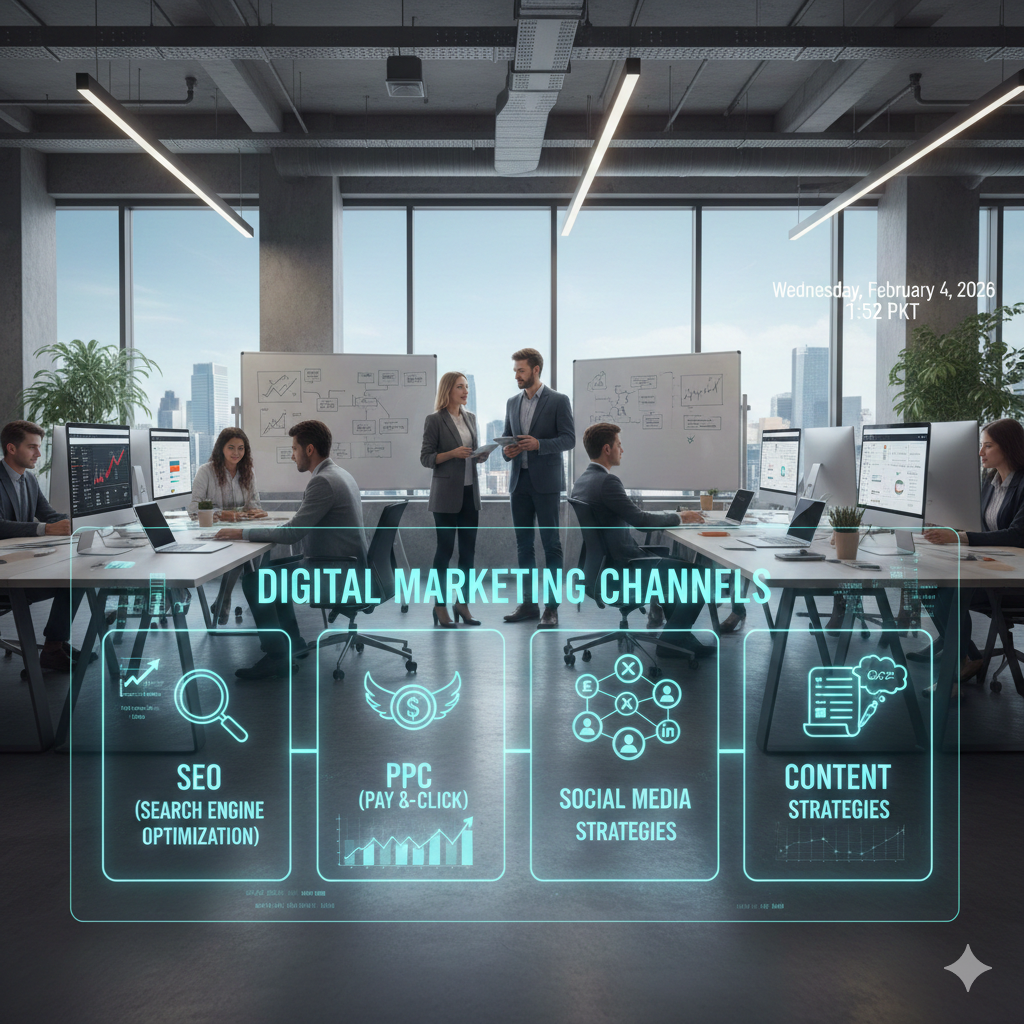
Types of Digital Marketing Channels
Digital marketing uses multiple channels to reach audiences across different platforms. Each channel serves a specific purpose and supports different stages of the marketing funnel.
Overview of Major Digital Marketing Channels
| Channel | Primary Purpose |
|---|---|
| Search Engines | Increase visibility and organic traffic |
| Paid Advertising | Drive immediate traffic and conversions |
| Content Platforms | Educate and engage users |
| Social Media | Build brand awareness and interaction |
| Nurture leads and retain customers |
Also read; Technology in Daily Life
Search Engine Optimization (SEO)
Search Engine Optimization focuses on improving a website’s visibility in organic search results. It involves optimizing content, technical structure, and backlinks to increase relevance and authority in search engines.
Key elements include:
- Keyword research
- On-page optimization
- Technical SEO
- Link building
Pay-Per-Click Advertising (PPC)
PPC is a paid digital marketing channel where advertisers pay when users click on ads. These ads appear on search engines, websites, and social platforms and are designed to generate immediate results.
Common PPC formats:
- Search ads
- Display ads
- Shopping ads
- Video ads
Content Marketing
Content marketing involves creating and distributing valuable, relevant content to attract and retain a target audience. Content supports SEO, social media, and lead generation efforts.
Examples include:
Social Media Marketing
Social media marketing uses platforms like Facebook, Instagram, LinkedIn, and X to promote brands and engage users. It includes organic posting and paid social advertising.
Core objectives:
- Brand awareness
- Community engagement
- Traffic generation
Email Marketing
Email marketing delivers targeted messages directly to users’ inboxes. It is used for lead nurturing, customer retention, and promotional communication.
Typical email campaigns:
- Newsletters
- Promotional emails
- Transactional emails
Affiliate Marketing
Affiliate marketing allows third parties to promote products or services in exchange for a commission on conversions or sales.
Influencer Marketing
Influencer marketing involves collaborating with individuals who have an established audience to promote products or services authentically.
Ready Key Points
- Digital marketing includes SEO, PPC, content, social media, and email
- Each channel serves a specific business objective
- Channels work best when integrated
Summary
Digital marketing channels are platforms and methods used to deliver marketing messages to audiences through digital environment.
Content Marketing
Content marketing focuses on creating and sharing valuable, relevant, and consistent content to attract and engage a target audience. The goal is to drive profitable customer action by building trust and authority.
Key Points:
- Types of content: Blog posts, videos, infographics, podcasts, ebooks, and social media content.
- Purpose: Educates, entertains, or informs the audience while subtly promoting the brand.
- Benefits: Increases brand awareness, strengthens customer relationships, and supports SEO efforts.
- Integration: Works best when aligned with social media, email marketing, and SEO strategies for maximum reach and engagement.
Summary Box:
Content marketing is about delivering meaningful content to your audience to build trust, encourage engagement, and drive business growth.
Key Takeaways:
- High-quality content establishes authority and credibility.
- Supports long-term SEO and audience growth.
- Complements other digital marketing channels for an integrated strategy.
Search Engine Optimization (SEO)
SEO is the process of optimizing a website to improve its visibility in search engine results, driving organic traffic from users actively searching for relevant information or products.
Key Points:
- On-page SEO: Optimizing content, meta tags, headings, images, and internal links.
- Off-page SEO: Building backlinks, social signals, and online mentions to boost authority.
- Technical SEO: Ensures website speed, mobile-friendliness, secure connections (HTTPS), and crawlability.
- Purpose: Attracts relevant traffic without paying for ads, building long-term growth.
Summary Box:
SEO helps websites rank higher in search results, making it easier for potential customers to find a brand organically.
Key Takeaways:
- Focuses on long-term, sustainable traffic growth.
- Increases visibility and brand credibility.
- Works best when combined with quality content and other digital marketing channels.
Pay-Per-Click (PPC) Advertising
PPC is a digital advertising model where businesses pay a fee each time their ad is clicked. It’s a way to drive targeted traffic quickly to websites or landing pages.
Key Points:
- Platforms: Google Ads, Bing Ads, social media ads (Facebook, Instagram, LinkedIn).
- Ad types: Search ads, display ads, shopping ads, video ads, and retargeting ads.
- Targeting: Ads can be shown based on keywords, demographics, location, interests, or behavior.
- Purpose: Provides immediate visibility, traffic, and leads for businesses.
Summary Box:
PPC advertising delivers fast results by placing ads in front of the right audience at the right time, ensuring measurable ROI.
Key Takeaways:
- Ideal for short-term campaigns and quick traffic generation.
- Allows precise targeting and performance tracking.
- Works best when combined with SEO and content marketing for a balanced strategy.
References
- Chaffey, D., & Ellis-Chadwick, F. (2022). Digital Marketing: Strategy, Implementation and Practice. Pearson.
- Fishkin, R., & Høgenhaven, T. (2020). The Art of SEO. O’Reilly Media.
- HubSpot. (2024). The Ultimate Guide to Digital Marketing Channels. HubSpot Academy.
Conclusion
Digital marketing channels are essential tools for businesses to connect with their target audience online. Each channel, from SEO and content marketing to PPC, social media, and email, serves a specific purpose and delivers measurable results. While SEO and content focus on long-term growth, paid channels provide immediate visibility, and social media strengthens engagement and brand awareness. The most effective strategies integrate multiple channels, ensuring cohesive messaging and maximizing overall impact. By understanding and leveraging these channels, businesses can drive traffic, generate leads, and achieve sustainable growth in the digital landscape.